
Hiking vs Trekking
Hiking is usually a single-day trail outing; trekking is a longer, often multi-day trip where food, water, shelter, recovery, and backup plans matter more.
Hiking and trekking differ most by time and commitment
The simplest answer is that hiking is usually a single-day walk on a trail, while trekking is a longer trip, often across several days and farther from easy help. The words can vary by region, but the practical difference is commitment.
Hiking normally lets you return to a trailhead, road, campground, or home the same day. Trekking asks you to manage what happens after the first day: sleep, food, water, weather, sore feet, route changes, and decisions while carrying more weight.
Commitment changes everything. Once a trip crosses into multi-day movement or remote terrain, planning becomes less about reaching one viewpoint and more about staying functional tomorrow.
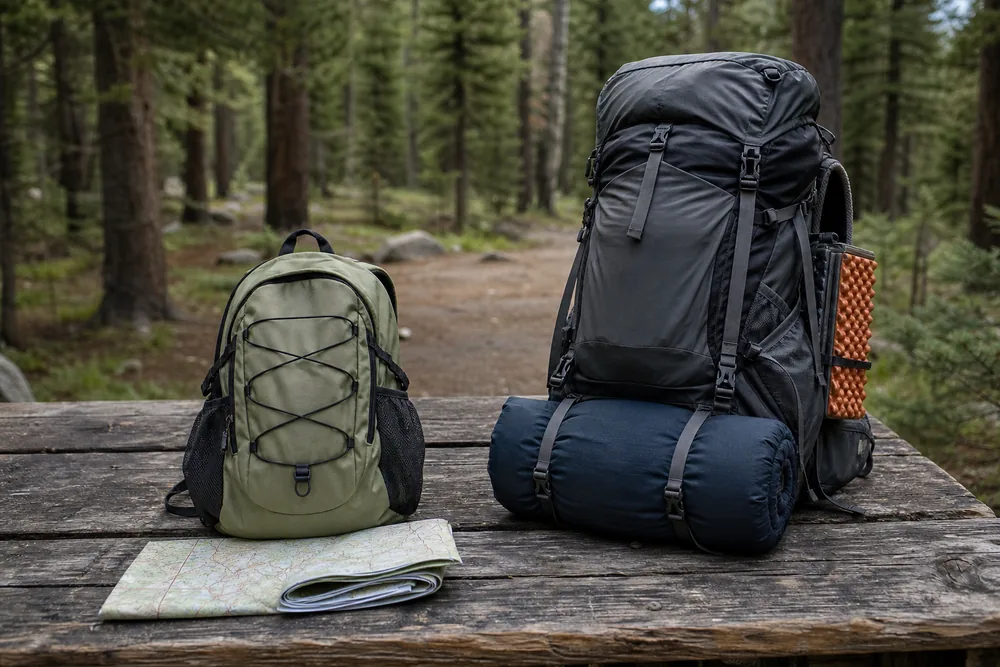
The hiking for beginners route rules keep the first category small: short distance, easy exit, and same-day feedback. The pre-hike route check then checks water, weather, daylight, and turnaround time before the trail starts.
For trekking, the first question is different. The plan must still work after sleep, food, water, and foot comfort have been tested by a full day of movement.
Which activity fits your plan?
Choose hiking when the route can be completed in a day and the main problems are pace, water, weather, footing, and a safe return. Choose trekking when the route requires multiple days, sleep systems, repeated meals, water planning beyond one day, or decisions far from an easy trailhead.
The line is not only mileage. A long day hike can be harder than a short first trek, but the trek still has a different job because you must wake up and keep moving with yesterday's choices still in the pack.
Use the consequences, not the label, to decide how to plan.
| Factor | Hiking | Trekking |
|---|---|---|
| Typical duration | Same day | Several days or more |
| Sleep plan | Home, lodging, or established campground after the hike | Camp, hut, lodge-to-lodge, or planned overnight system |
| Pack role | Water, food, layers, light, navigation, and safety basics | Day gear plus sleep, food, water treatment, and recovery systems |
| Route margin | Easier to shorten or turn back | Exits may be farther apart |
| Main skill | Pacing, route choice, weather, and turnaround judgment | Multi-day pacing, load management, camp rhythm, resupply, and recovery |
| Best beginner target | Short marked trail with an easy return | Shorter supported route with clear camps or lodging |
This comparison is about practical planning. A local trail can be called a trek by one person and a hike by another, but the pack, risk, and recovery still need to match the route.
Planning documents look different
A hiking plan can often fit on one short note: route name, trailhead, expected return, weather concern, water amount, and turnaround time. That note is still important, but it usually covers one day of decisions.
A trekking plan needs more layers. It should name daily segments, sleep stops, water assumptions, food plan, weather options, exit points, and what changes if one day runs slow.
The plan gets longer because the consequences last longer.
| Planning item | Hiking version | Trekking version |
|---|---|---|
| Route note | One trail and return time | Daily route segments and backup exits |
| Water | Carry or known same-day refill | Refill timing across days |
| Food | Snacks and meal timing | Multi-day calories and resupply |
| Weather | Start, layers, and turnaround | Daily forecast windows and shelter decisions |
| Recovery | Post-hike rest | Sleep, foot care, and next-day pace |
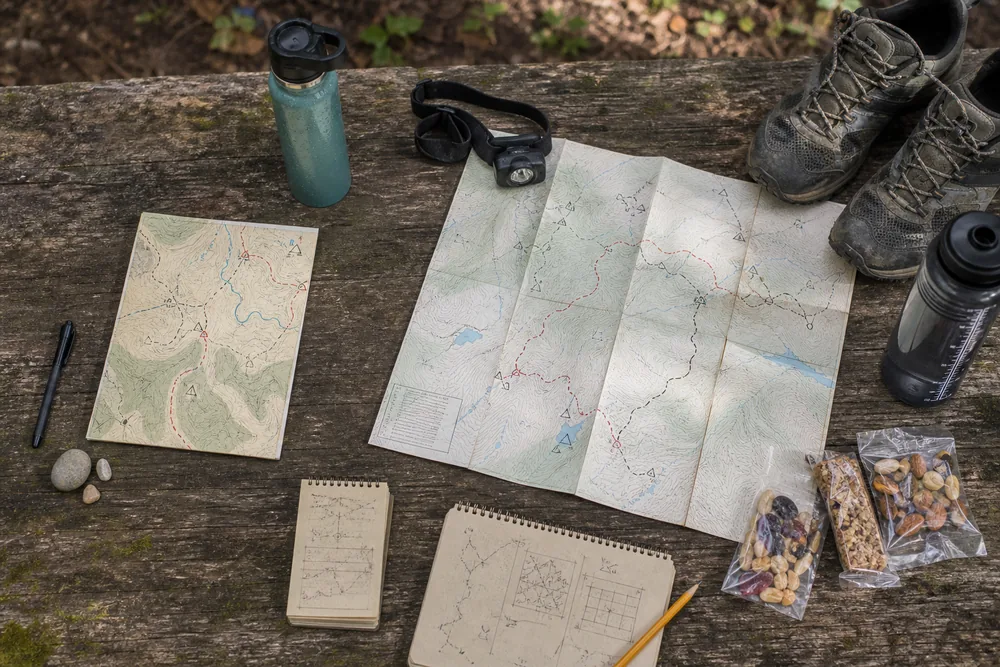
How the pack changes
A hiking pack should solve likely same-day problems: water, food, light, layers, navigation, and foot care. The goal is to keep the day correctable if weather, pace, or feet change.
A trekking pack has to keep you moving across nights. It may include shelter or hut gear, sleep insulation, more food, water treatment, extra layers, repair items, and a way to keep critical gear dry for the next day.
A trek carries tomorrow. That is why weight, packing order, and recovery matter more than they do on a normal day hike.
Pros
Cons
- Hiking can still become risky if distance, heat, weather, or daylight are underestimated.
- Trekking punishes small gear, food, and foot-care mistakes because they repeat the next day.
- Trekking needs stronger exit planning when help, roads, or services are far apart.
Same-day packing belongs to the hiking packing list because the pack solves one day's water, warmth, light, navigation, food, and foot-care problems. Multi-day load choices belong closer to the trekking pack list because sleep, food, and repeated recovery change the list before the trailhead.
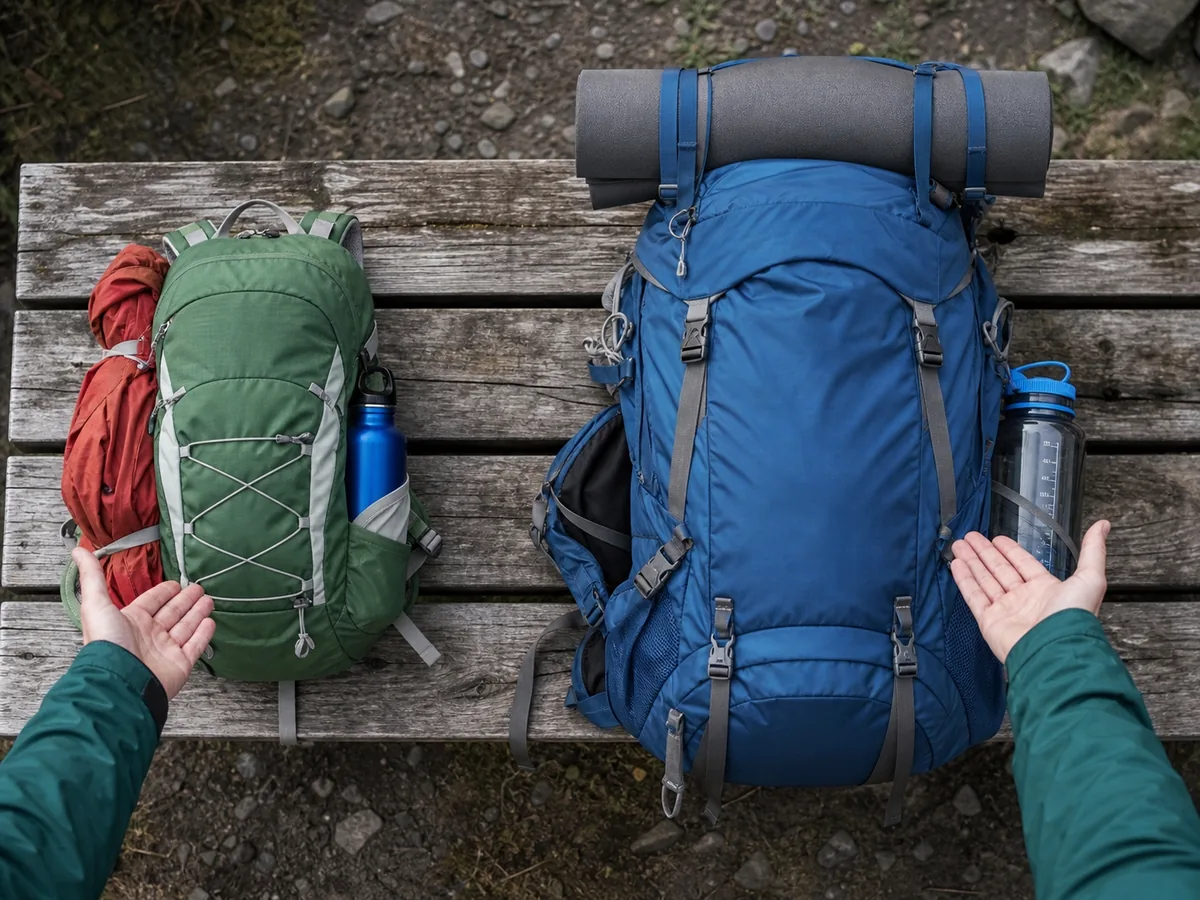
Fitness and pacing are not the same problem
Hiking fitness is often about finishing one route with enough water, foot comfort, and daylight left. You can recover at home, adjust shoes, and fix the next plan after the hike.
Trekking fitness has a second-day test. Sore feet, poor sleep, heavy pack weight, and under-eating can make the next morning harder than the first climb.
Trekking tests repeatability. A strong first day is not enough if the next day starts with blisters, damp layers, and low energy.
| Question | Hiking answer | Trekking answer |
|---|---|---|
| Can I finish today? | Main fitness question | Only the first checkpoint |
| How much pack weight matters? | Usually light to moderate | Central to pace and joint stress |
| How do mistakes show up? | Mostly on the return | Repeat across days |
| What training helps? | Walking time, hills, descents, and pack comfort | Back-to-back walking, loaded pack practice, recovery, and foot care |
| When should I scale down? | When pace, water, weather, or feet slip | When one day would compromise the next |
One-trail-day fitness belongs with hiking fitness training because the target is distance, climb, descent, and recovery after one route. Repeated days under load belong with trekking training load because the next morning becomes part of the test.
Risk changes when exits get farther apart
Hiking risk often comes from familiar mistakes: late starts, poor water planning, wrong footwear, weak navigation habits, or ignoring weather. Those still matter, but the same-day route usually offers more chances to shorten the plan.
Trekking risk grows when a small issue must be carried into the next day. A wet sleeping layer, a blister, a missed water source, or a late camp decision can affect several later choices.
Distance from an easy exit is the risk multiplier. The farther you are from roads, trailheads, lodging, or help, the more conservative the plan should become.
For same-day risk, hiking safety tips and common hiking mistakes cover the early fixes. For multi-day planning, common trekking mistakes is the better reference.
Can trekking use huts, lodges, or hotels?
Yes.
Trekking does not require sleeping in a tent. A hut-to-hut or lodge-to-lodge trip still asks you to move across several days, manage daily food and water, care for feet, recover overnight, and reach the next stop inside a weather and transport window.
Lodging reduces some equipment, but it adds dependencies. A reservation, staffed season, meal schedule, key pickup, cash requirement, or late-arrival policy can become part of the route plan.
Confirm what the lodging actually supplies instead of assuming every bed includes blankets, food, water, or emergency access.
A roof changes gear, but it does not remove multi-day commitment. You still need a plan for a closed hut, missed connection, slow stage, illness, or weather that prevents reaching the booking.
Camping gives more control over where the sleep system travels, but it adds shelter, insulation, food storage, stove, waste, and site responsibilities. Choose the overnight style first because it changes pack volume and the consequences of a delayed day.
Terrain alone does not decide the label
A paved route across several days can plan like a trek, while a steep rocky summit completed in one day can still plan like a hike. Surface difficulty affects footwear, pace, balance, and risk, but duration and commitment decide which systems must repeat tomorrow.
Infrastructure changes the margin.
Frequent roads, towns, staffed huts, and reliable transport can make food, shelter, and exits easier. Remote ground with no signal or simple retreat needs more independent equipment and more conservative daily stages.
Difficulty and commitment differ. A route can be technically easy yet logistically demanding, or technically hard yet finished as one self-contained day.
Use four questions when the label is unclear. Ask where you sleep, how many days you must remain functional, how far the hardest point is from an exit, and what happens if one stage runs late.
Those answers guide the pack and plan better than the local vocabulary alone.
Which hiking skills carry into trekking?
Pacing, footwear, navigation, weather judgment, water habits, and turnaround decisions carry directly from hiking into trekking. The difference is that trekking asks you to repeat them after a night of imperfect sleep and a day of accumulated foot and pack stress.
A day hiker can learn a great deal from one difficult route, but trekking needs evidence across consecutive days.
Practice back-to-back training walks with the intended footwear and a realistic load. Check whether hot spots, appetite, energy, and decision quality recover by the next morning.
Skills transfer, recovery must be tested. Strong navigation on day one does not solve poor sleep, damp gear, low food intake, or a foot problem that grows on day two.
Camp or lodging routines are additional skills. You need to dry and protect equipment, eat enough, treat or collect water, care for feet, charge or conserve devices, and prepare the next day's route without losing sleep time.
Start a first trek where one weak day has a simple exit. Short daily stages, known overnight stops, reliable water information, and nearby transport let hiking skills expand without making every lesson expensive.
Logistics and recovery separate the two plans
A hike usually needs one trailhead, one departure window, and a same-day return. A trek may need transport between endpoints, permits or reservations for several nights, food storage, lodging or camps, resupply, and a plan for wet gear and tired feet each morning.
Tomorrow changes the plan. A late finish on a hike reduces the evening.
A late finish on a trek can also reduce sleep, delay the next start, and consume food or weather margin meant for another day.
| Logistics question | Hiking answer | Trekking answer |
|---|---|---|
| Where do you finish? | Usually the starting trailhead or a same-day pickup | May be a different town camp hut or transport point |
| What must be reserved? | Often parking or a day permit | May include camps huts transport permits and food storage |
| How do you recover? | Food dry clothes and sleep after returning | Foot care drying eating and sleep must happen on the route |
| What if one day runs late? | Turn around or finish later the same day | Recalculate the next camp transport food and weather window |
| What ends the trip? | A safe return to the trailhead | A safe exit after every planned stage still works |
Budget follows the same pattern.
Hiking often needs transport, footwear, a daypack, food, and basic safety equipment. Trekking can add overnight equipment, several days of food, lodging or campsite charges, permits, transfers, and replacement time if one delayed stage breaks a booking.
Do not choose trekking only because the distance sounds more impressive. Choose it when you can manage the overnight logistics and still make conservative choices on the second and third day.
Real examples show the boundary
A five-mile forest loop with a lunch stop is hiking because the main decisions are same-day water, weather, footing, and a return time. A ten-mile ridge route can still be hiking if you start and finish the same day, but it needs stronger pacing and safety margins.
A two-day route between huts, even on good trail, is trekking because sleep, food, next-day recovery, and weather carry across the trip. A remote route with camping and uncertain water is even more clearly trekking because one weak choice can affect several later decisions.
The boundary is practical. Ask what must still work tomorrow, not only how far you walk today.
Short local loop
Hiking, because the route returns to the same-day plan.
Big summit day
Hiking with larger margins when the return is still same day.
Hut-to-hut weekend
Trekking, because sleep, food, and next-day pace matter.
Remote campsite route
Trekking, because water, shelter, and exits shape every day.
Long no-exit day
Plan like a hybrid and borrow trekking-style safety margin.
When in doubt, choose the stricter plan. Carrying a little extra planning discipline is cheaper than discovering on trail that the route behaves more like trekking than hiking.
Beginner choice: start with hiking, graduate to trekking
Most beginners should start with hiking because it keeps feedback fast. You can learn shoes, socks, water, snacks, layers, map habits, and turnaround judgment without also managing sleep and multi-day food.
Move toward trekking when day hikes feel controlled, your pack fit is stable, your feet recover well, and you can make conservative decisions before conditions force them.
Earn the longer trip with boring evidence: steady pace, calm navigation, usable gear, and no repeated foot or water problems.
- Start with short hikesLearn shoes, water, pace, and weather judgment.
- Add longer day hikesTest climbs, descents, and pack access.
- Practice back-to-back walksLearn whether feet and energy recover overnight.
- Carry trekking-style weightTest pack fit before a real multi-day route.
- Choose a short first trekKeep exits, camps, and water planning simple.
That progression keeps the label honest. You are not becoming a trekker by carrying a bigger pack once.
You are building the ability to make several days of good trail decisions in a row.
Quick decision guide
Call it hiking when the plan is a same-day route with a normal daypack and a simple return. Call it trekking when the plan includes nights, heavier load, remote exits, or repeated days of movement.
If the trip sits between the two, plan for the harder category. A long hike with uncertain weather, a heavy pack, or a distant exit should borrow trekking-style margins even if it ends the same day.
Plan for the consequences, not the word you prefer.
| Your plan | Treat it as | First planning move |
|---|---|---|
| Two-hour marked local trail | Hiking | Use a simple day hiking checklist |
| All-day route with big climb | Hiking with larger margin | Train and set a strict turnaround |
| One-night hut or campsite route | Trekking | Plan sleep, food, water, and next-day recovery |
| Several remote days | Trekking | Build route, resupply, weather, and exit plans |
| Long day with no easy exit | Hybrid edge case | Use trekking-style risk margin |
Sources
The National Park Service describes day hiking preparation through current conditions, route planning, water, weather, the Ten Essentials, and a turnaround plan: Hiking Safety.
REI's backpacking planning material adds overnight route stages, sleep, food, water treatment, navigation, permits, and emergency preparation: How to Plan a Backpacking Trip.
Use practical consequences. Regional labels vary, but the trip still needs the equipment, recovery, and exit plan created by its real duration and remoteness.
AnswersQuestions readers ask
Is trekking just long-distance hiking?
Often yes in plain language, but trekking usually means a longer, often multi-day trip where gear, food, water, recovery, and exit planning become more important.
Is hiking easier than trekking?
Usually, because hiking is often a same-day activity with a smaller pack and easier exits. A hard day hike can still be physically demanding.
Can a one-day route count as trekking?
Some regions use the words differently, but if there is no overnight or multi-day commitment, it usually plans more like hiking with a larger safety margin.
Should beginners hike before trekking?
Yes. Short hikes teach shoes, pacing, water, layers, navigation, and turnaround judgment before multi-day logistics add more consequences.