
Solo Camping Means Every Critical Task Works for One
Choose a simple exit, leave an exact overdue plan, test every camp task alone, and leave while you can still solve the problem yourself.
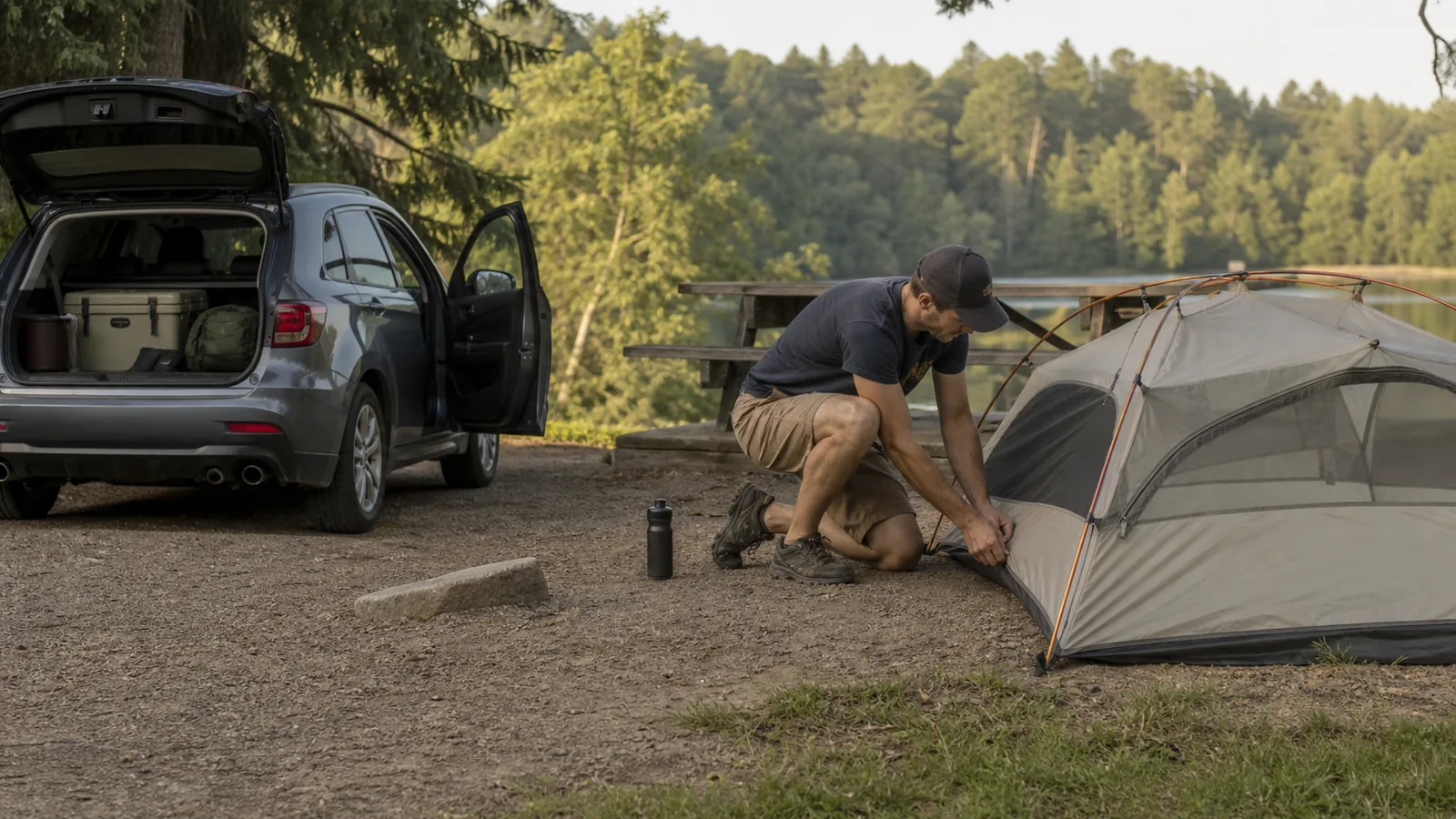
Solo camping is reasonable when one person can set up shelter, manage food and water, recognize a changing problem, leave without help, and give an outside contact enough detail to act after a missed return.
With nobody else to hold a tent pole, watch a stove, find the keys, or notice slipping judgment, even basic camp tasks become less forgiving. The first solo trip should make those jobs easier, not make the location more remote.
Solo camping depends on independent operation. Pick a legal developed site with a short route to the vehicle, test the exact setup alone, and decide what ends the stay before weather or fatigue makes that decision harder.
Simple beats isolated for a first night alone.
Some camp tasks get much harder with one pair of hands
Imagine that rain begins while the tent is half raised and dinner water is still in the vehicle. With two people, one can protect the shelter while the other retrieves the water.
Alone, the order of work must prevent both needs from becoming urgent at once.
That changes packing and setup.
Shelter parts, light, keys, rain clothing, and the first water bottle need to remain reachable while both hands are busy. A bag that works when a partner passes items forward may fail when it is placed under loose fabric or behind an open vehicle door.
Time also becomes a safety resource. Arriving early gives one person room to inspect the pad, correct a shelter mistake, eat, secure food, and prepare the night without rushing.
A late arrival removes the second observer at the same time that darkness removes visual information.
Keep reserve capacity for departure.
Do not use every dry layer, all phone power, the last easy food, or the final daylight on optional comfort. The camper who starts a task must still be able to stop, pack, and drive.
Every task needs an owner, and on a solo trip that owner is you.
How should a simple exit shape your first solo campsite?
Trace the route from the sleeping bag to the driver's seat.
The tent door, footwear, light, keys, necessary medication, and a weather layer should remain usable if you decide to leave at 2 a.m. A beautiful pad is a poor first solo choice when steep steps, a long carry, a locked gate, or deep mud stands between you and the vehicle.
A developed campground can give beginner campers access to staff, occupied loops, marked roads, toilets, and known checkout procedures. Those features reduce unknowns while you learn how your own system behaves overnight.
Phone service can help, but it should not carry the whole plan. Record the reservation, campground map, current weather details, and important numbers in your first camping plan before departure.
Check the current forecast against the site surface and access road. Cold, wind, and frozen access require stricter winter camping limits because a sleep problem can become a difficult solo exit.
| Site feature | Lower commitment | Higher commitment |
|---|---|---|
| Vehicle access | Short clear walk to the parked vehicle | Long carry steep steps or uncertain gate access |
| Campground support | Host staff or occupied loop nearby | No nearby help and no confirmed contact point |
| Information | Current map rules and forecast saved offline | Important details depend on a live connection |
| Shelter exposure | Protected legal pad with clear drainage | Open wind exposure or water collection risk |
| Departure | Known road and simple turn out | Mud snow flooding or a difficult vehicle route |
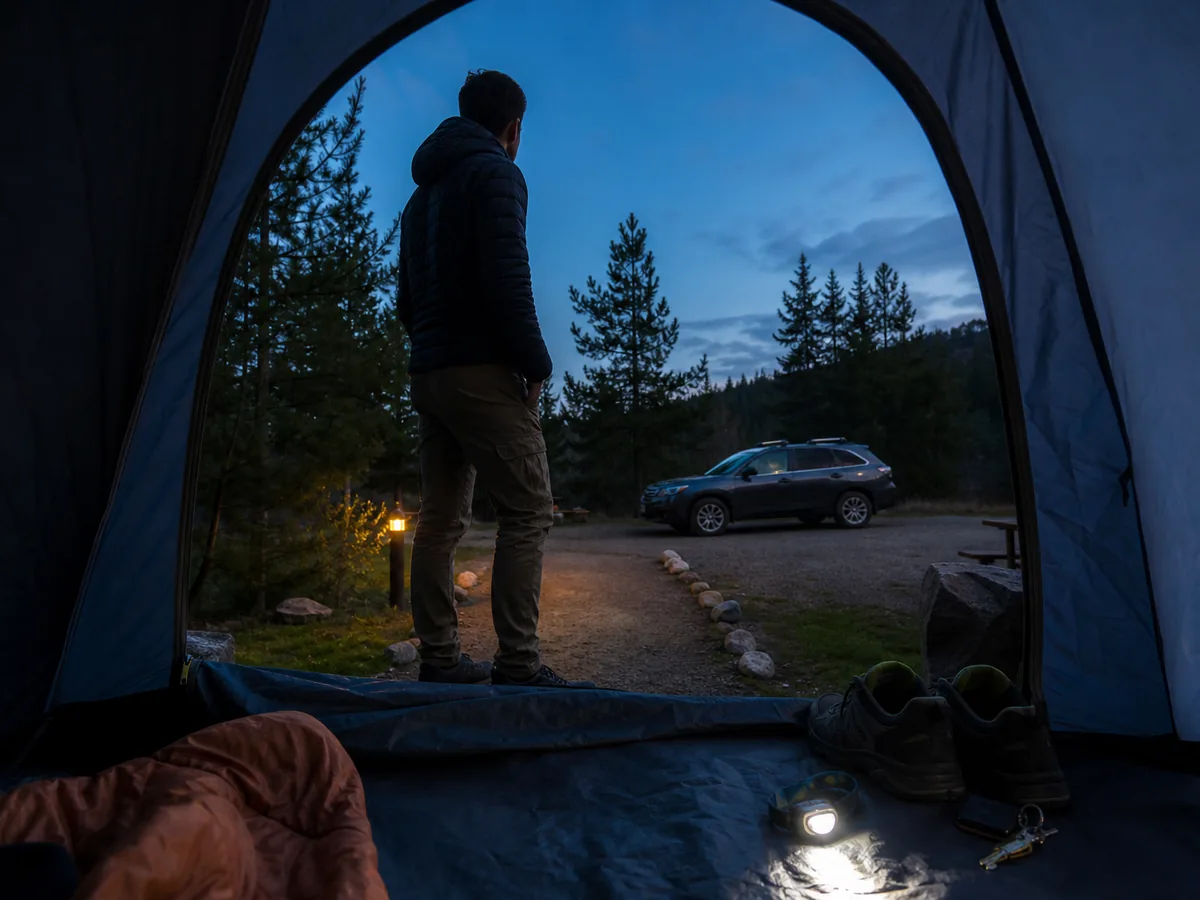
For the first night, choose the site you can leave calmly. More solitude can come after you have proved that setup, sleep, judgment, and closeout work with one person.
Recoverability chooses the site before scenery or silence does.
What should a solo camping check-in plan include?
A message with only the words camping tonight gives another person almost nothing to act on. Leave the exact campground, loop or site number, vehicle description and plate, departure point, planned arrival and return, expected communication, and any intended side trip.
Give the contact a specific overdue time.
A promise to text sometime Sunday is vague.
A precise instruction gives the deadline, first contact attempt, managing agency, and trip information the contact should provide.
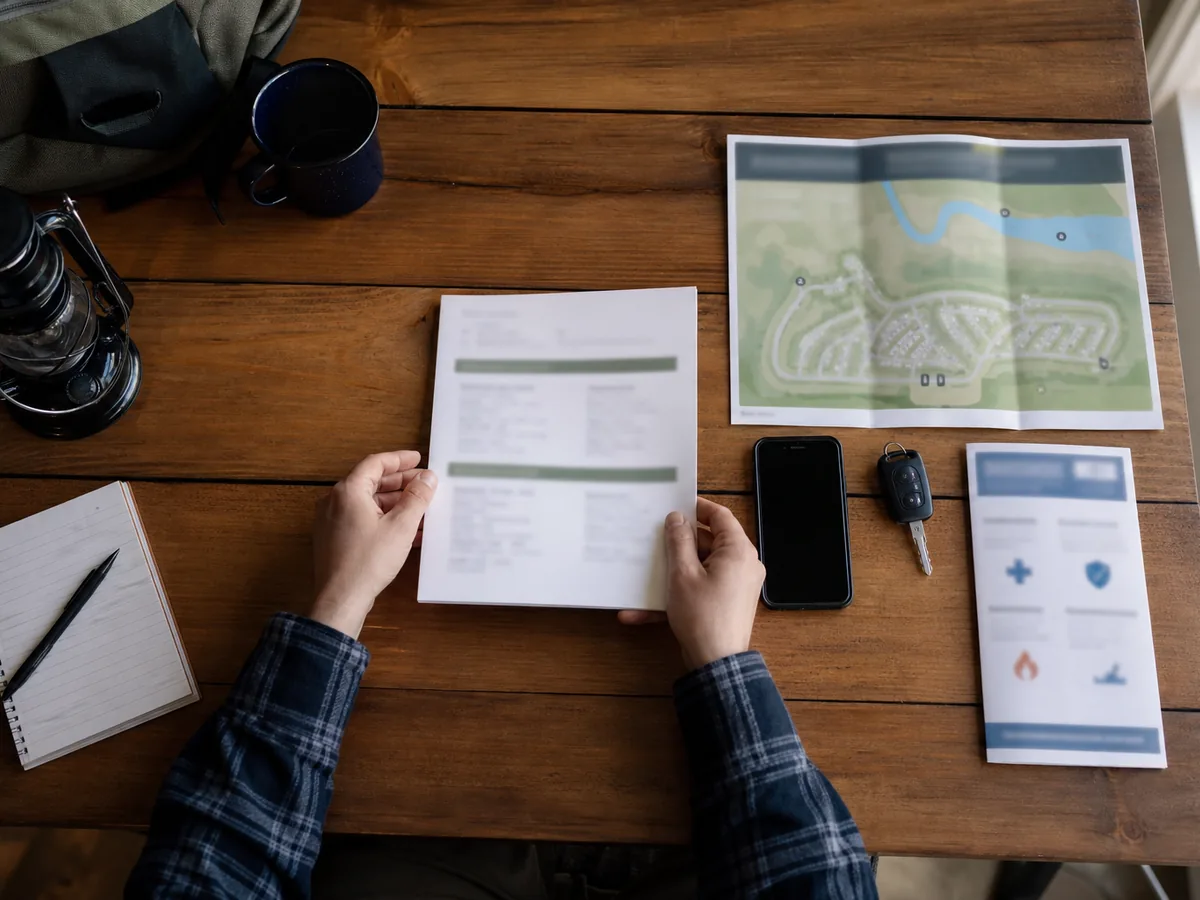
Tell the contact what ordinary changes are allowed. You might move to a named backup campground or return one morning early.
Any change outside those bounds needs a new message before you go there.
Do not depend on live location sharing as the only record.
Batteries fail, coverage disappears, and apps can show stale positions. The saved plan should still make sense when the phone cannot update.
Close the loop immediately after leaving the campground. Send the agreed message before adding a meal stop, scenic drive, or errand.
Otherwise the contact may start the correct response while you are safely somewhere else.
An exact deadline creates action. Location sharing alone does not.
Practice the two-person jobs alone before you go
Wind during shelter setup exposes hidden dependence quickly. Rehearse with the exact camping packing list so shelter parts, stakes, light, food storage, and repair items are all tested in their real bags.
Food storage creates a second test.
The required container, locker, or vehicle method must work while cooking gear is out and the shelter door is open. If securing scent requires abandoning a lit stove or leaving food unattended, the sequence needs to change.
Water should be available before cooking begins. Before arrival, calculate camp water needs because one person cannot watch a stove, hold a light, and walk to a distant tap at the same time.
Use food that tolerates interruption.
A simple familiar meal reduces open packages, cleanup, fuel use, and decisions. If weather worsens, you should be able to stop cooking, secure everything, and eat without rebuilding the kitchen.
Light belongs on your body before dark. When you are camping in rain, a headlamp stored in the tent cannot help while wet hands, a loose guyline, and a blown door already occupy you.
- Stage the exitPut keys light footwear rain clothing and essential medicine where one hand can reach them.
- Raise the shelterComplete every pole stake fly and tension step without a helper.
- Build the sleep systemKeep dry insulation protected while doors and bags remain open.
- Set food and waterProve that cooking cleanup and required storage can happen in a safe order.
- Walk the night routeFind the toilet vehicle water point and site marker with the planned light.
- Break campPack wet or awkward gear alone without blocking access to the vehicle.
- Send the closeoutNotify the outside contact before changing the return plan.
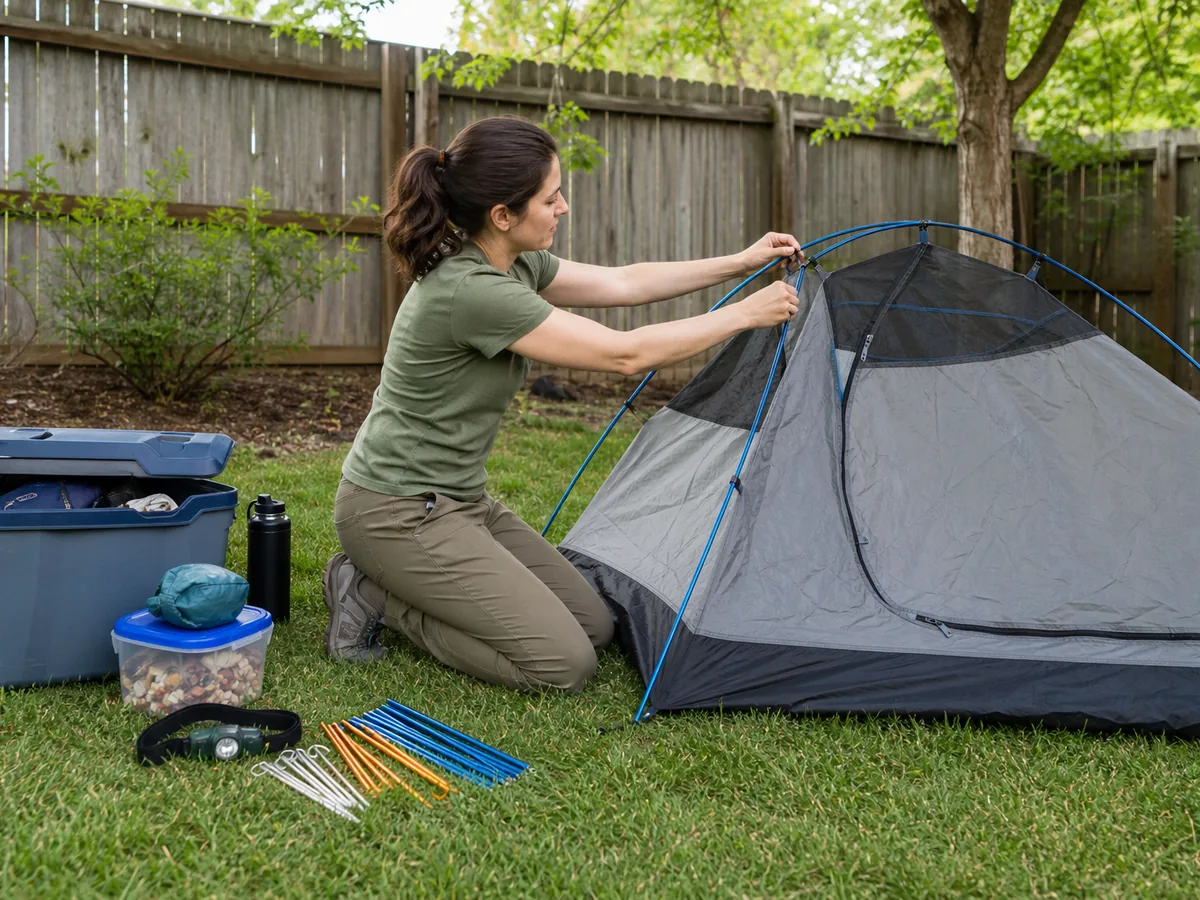
Repeat any step that required an improvised extra hand. A different bag position, temporary anchor, simpler meal, or easier shelter can remove the dependence without buying a duplicate kit.
Rehearsal exposes borrowed hands before the trip depends on them.
A few solo failures need a planned backup
Light and communication deserve separate failure paths.
Carry a second usable light where it can be found in darkness. Keep a charged phone protected from weather, but also save essential trip details and numbers offline.
Navigation at a developed campground is usually simple, yet the road home still matters. Save the route, fuel plan, reservation, gate instructions, and vehicle location.
A paper note can preserve the address and contact numbers if the phone becomes unusable.
Ignition is useful only where cooking or fire is currently legal. A backup ignition source can preserve a permitted stove meal, while ready-to-eat food protects the same basic need when flame is prohibited or the stove fails.
Carry repair items for failures you can actually correct. An untested object can trigger common camping failures when it replaces a needed shelter, water, light, communication, or transport function.
Protect light
Two independent usable lights prevent darkness from stopping every task.
Protect communication
Charged power and offline details keep the plan usable without a live app.
Protect shelter
A small compatible repair can stop a tear or broken connection from growing.
Protect food access
One no-cook meal covers stove failure or a sudden flame restriction.
Protect departure
Keys fuel tire condition and required vehicle equipment preserve the drive out.
Skip false duplicates
Two versions of a comfort item do not replace a failed critical function.
Back up the function that preserves an exit, not every object in the bag.
When should a solo camper run four condition checks?
A solo trip needs scheduled checks before you feel worried. Without a partner, you lose the casual second opinion that notices a falling temperature, an unsecured food bin, a weak headlamp, or a driver who is becoming too tired to leave safely.
The first check happens before unloading. Sit for a few minutes and compare the actual site with the plan.
Confirm the site number, legal parking, weather, ground condition, nearby activity, toilet route, and vehicle exit while every option remains easy to change.
If the site depends on a rule you cannot confirm, a gate you may not be able to use, or a road already deteriorating in rain, use the backup before unpacking turns the choice into work. Sunk setup time is never a reason to keep a poor site.
The second check happens after shelter, food storage, water, and the sleep system work, but before optional comfort gear comes out. Walk from the tent to the vehicle and toilet with the light you will use at night.
Confirm that guylines, open doors, cooking equipment, and loose bins do not block that path.
Test the shelter from inside. You should know how to open the door, reach footwear, find keys, put on a weather layer, and locate medication without emptying the tent.
If one task still needs two hands plus a helper, change the setup while daylight remains.
The third check comes before sleep. Read the latest forecast or saved forecast details, account for food and scented items, close every flame task, and place the next required item where you can reach it.
Check your own balance, hand control, alertness, warmth, pain, and ability to drive.
This is also the time to compare the night with the departure limits written before the trip. A forecast that has worsened, a shelter that will not stay stable, or a body that is no longer functioning normally should trigger the prepared exit.
Waiting until midnight only removes light and energy.
The morning check happens before committing to another activity. Look for water entering the shelter, damaged anchors, missing food, vehicle trouble, poor sleep, unusual soreness, vomiting, dizziness, or thinking that feels slow.
Eat, drink, warm up, and correct a small problem only when the correction clearly restores normal function.
Do not let checkout time create a rushed pack. Keep footwear, weather protection, water, light, keys, and communication available until every other item is secured.
If you are too sleepy to drive, use a legal safe place to recover and update the outside contact about the delay.
Write the result of each check in a phone note or on paper. Record four short facts such as road condition, wind direction, hand control, and exit access so the next check has a clear comparison.
A change across two checks is more useful than trying to remember whether the night merely feels different.
When a check fails, correct one cause and repeat the relevant test. If normal function, legal setup, or the easy exit does not return, leave instead of making several uncertain fixes at once.
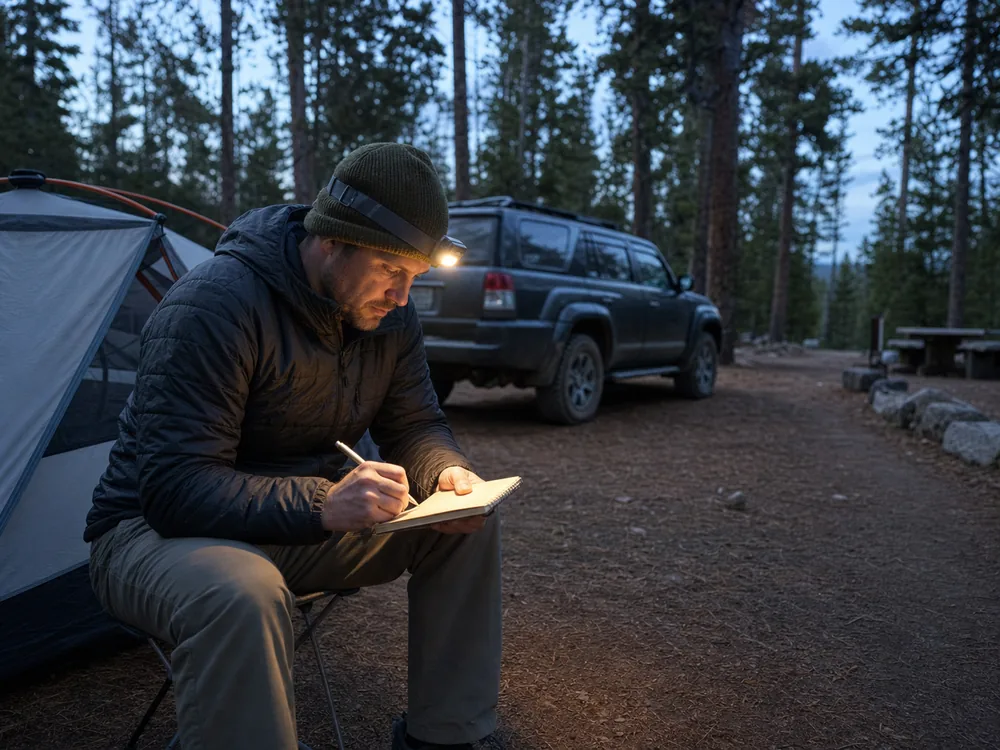
Four planned checks replace the second person who would otherwise notice change. They also make the decision to leave feel routine because you are comparing facts with a limit you already chose.
What should you do when you hear a noise at night?
Name the sound before reacting. Fabric tapping, a cooler lid moving, a neighboring car door, wind in a branch, an animal near food, and a person at the site boundary call for different responses.
Pause, listen for direction and repetition, then use light from inside the shelter when that can safely clarify the source.
Weather leaves patterns.
Increasing gusts, changing tent tension, water touching the floor edge, repeated lightning, or falling branches are more useful than a general feeling that the night is unpleasant. Compare the actual change with the forecast and the exit limits you set earlier.
Wildlife should not be investigated for a better look. Secure food, respect boundaries, and follow campground wildlife rules while you remain at a safe distance or move to an approved safer location.
People require evidence too. Use a proportionate safety response because ordinary voices differ from repeated entry, threats, attempts to open property, or blocked departure.
| Signal | First check | Practical response |
|---|---|---|
| Tent fabric or guyline noise | Wind direction tension and loose parts | Correct from the safest position or move to the prepared exit |
| Water near the shelter | Drainage direction and floor edge | Protect dry gear and leave before access worsens |
| Repeated thunder or lightning | Current official guidance and shelter options | Move to the safer planned location |
| Animal near camp | Food storage doors and escape space | Stay back secure scent and follow local wildlife guidance |
| Unknown person at the boundary | Words actions distance and exit access | Remain secure contact staff or leave when safe |
| Body or thinking change | Warmth balance pain coordination and alertness | Stop optional tasks and use the health exit threshold |
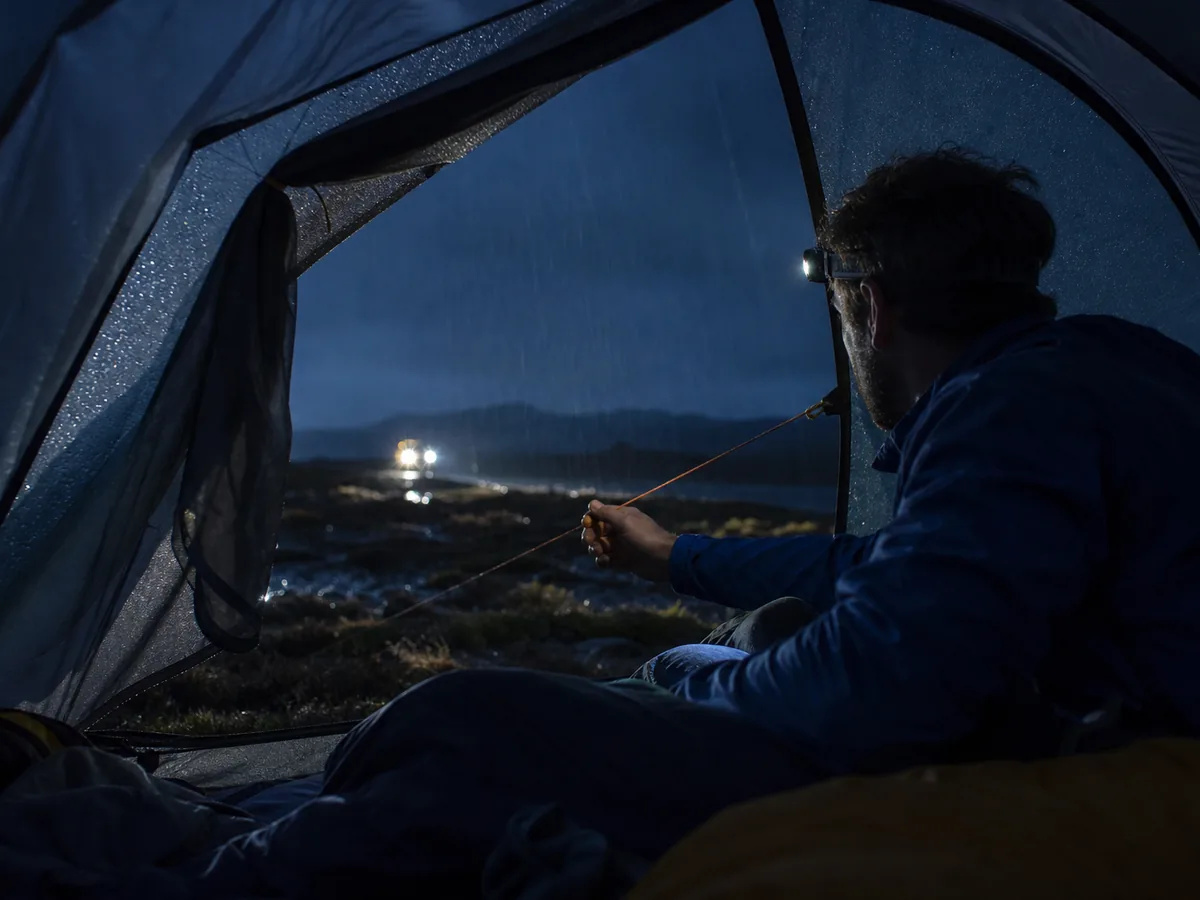
Do not leave the shelter merely to prove that nothing is wrong. Diagnose from the safest available position and act when the signal crosses a prepared threshold.
Evidence chooses the response, not the volume of an unfamiliar sound.
When should a health or access problem end the trip?
A cut, headache, stomach problem, chill, or sore joint matters when it changes walking, hand use, balance, alertness, or the ability to drive. Stop the next optional task and see whether basic first aid, food, water, warmth, or rest returns normal function.
Equipment problems deserve the same test.
A leaking shelter, failed light, inaccessible food, lost key, or unstable stove should end the activity it supports. Leave if the remaining system cannot protect sleep, food, water, warmth, communication, or transport.
Watch the access route. Rising water, accumulating snow, deepening mud, falling branches, a gate schedule, or vehicle trouble can remove the easy departure you selected.
Acting early keeps a campground inconvenience from becoming a call for rescue.
Security deserves proportionate action. The same solo trip communication discipline helps at camp, but a developed campground still needs locked property, controlled keys, current rules, and an available vehicle.
Early departure preserves choices. Waiting can remove them.
How should you close out a solo camping trip?
Pack in an order that keeps water, light, keys, weather protection, and the outside contact available. When camping with a dog, keep the leash secured through the empty-pad sweep and vehicle loading.
- Extinguish or close every permitted heat source under local instructions.
- Secure all food waste and scented items for transport or legal disposal.
- Inspect the shelter footprint parking space and route between them.
- Confirm the vehicle starts and the exit road remains usable.
- Send the agreed safe-return message before making another stop.
- Report damage hazards or lost property through the campground process.
Start the drive only when you are rested enough to do it safely.
If sleep was poor, eat, hydrate, and use a safe legal place to recover before driving. Tell the contact about any meaningful delay.
The trip ends when the contact receives the promised closeout, not when the tent enters the vehicle.
Close the communication loop before changing the plan.
Sources
The National Park Service trip-planning guide explains what to include in a trip plan, such as location, route, vehicle, equipment, communication, expected return, and overdue actions: Trip Planning Guide.
Its Ten Essentials guidance covers navigation, light, insulation, first aid, fire, repair tools, food, water, and emergency shelter chosen for the trip: Ten Essentials.
The National Park Service recommends checking current conditions, skills, reservations, equipment, offline information, communication, and backup plans before camping: Before the Trip.
The outside plan stays usable even when live tracking does not.
Step by stepPractical steps
- Choose a legal developed site with a short known route to the vehicle.
- Give an outside contact exact trip details, an overdue time, and action instructions.
- Rehearse shelter, food, water, light, storage, and pack-down with one pair of hands.
- Back up the functions that protect light, communication, shelter, food, and departure.
- Diagnose night changes from a safe position and use prepared action thresholds.
- Leave while walking, thinking, hand use, weather, and vehicle access still support self-exit.
- Send the promised closeout before changing the return plan.
AnswersQuestions readers ask
Is solo camping safe for a beginner?
A beginner can reduce risk by using a legal developed campground, arriving in daylight, keeping the vehicle close, testing every camp task alone, leaving an exact overdue plan, and setting conservative exit limits.
What should I tell someone before solo camping?
Share the exact campground and site, vehicle details, travel route, arrival and return times, expected check-in, approved backup location, overdue deadline, and the agency or campground to contact.
Do I need two of every item for solo camping?
No.
Protect critical functions instead. Independent light, usable communication details, shelter repair, a no-cook meal, and reliable vehicle access matter more than duplicating every comfort item.
What should I do if I hear something outside the tent?
Stay in the safest available position, identify direction and repetition, check weather and secured food, use light carefully, and act on evidence. Contact staff, leave, or seek emergency help when a real hazard crosses your prepared limit.
When should I leave a solo campsite early?
Leave when illness, injury, lost hand function, poor judgment, shelter failure, severe weather, threatening conduct, a blocked route, or vehicle trouble makes a safe independent stay or departure less reliable.