
How Much Water Should You Carry for a Hike?
Match what you carry to heat, effort, and refill options.
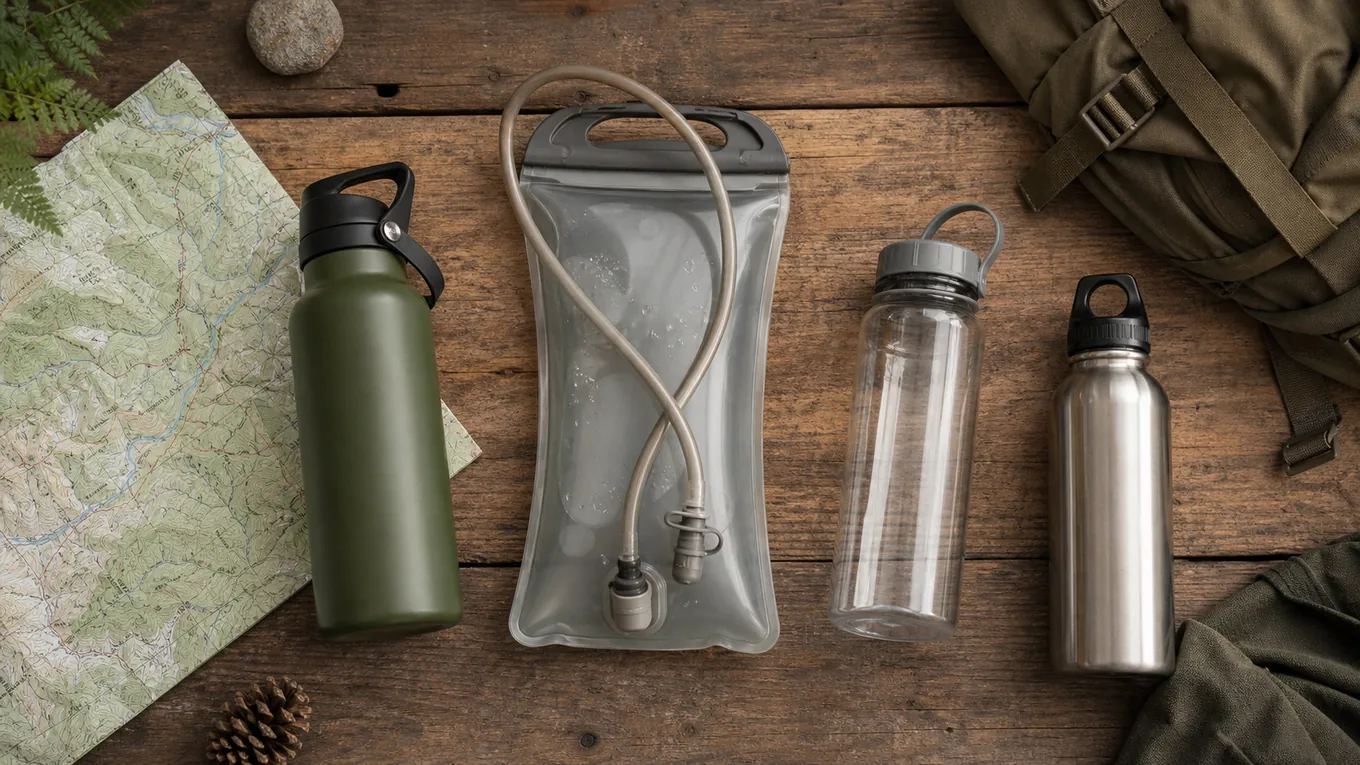
Water planning is a route decision, not a bottle-count guess. Start with hours outside, heat, effort, and reliable refill points, then add enough reserve to turn around before thirst controls the day.
Start from a baseline, then adjust it
Start with 0.5 liter per hour for moderate hiking in mild weather.
Move toward 1 liter per hour when the day is hot, the climb is steep, the sun is exposed, or your pack is heavy.
Use time, heat, and effort before bottle size.
A simple field formula is: hours outside times your expected drinking rate, plus reserve. For example, three moderate hours at 0.5 liter per hour starts at 1.5 liters, then gets rounded up if the route is hot, exposed, or slow.
Round in practical container sizes. If the estimate is 1.7 liters and you carry one-liter bottles, bring two liters instead of pretending the smaller number will fit the real day.
Treat the range as a planning bracket, not a command to finish a fixed volume each hour. A small hiker on a cool walk may sit below the midpoint, while a larger hiker climbing in heat may approach the upper end.
Start the hike normally hydrated. Drinking several extra liters before leaving does not create a useful reserve inside the body, and it can leave you uncomfortable before the first climb.
Water is also pack weight. One liter weighs about 1 kilogram or 2.2 pounds, so a four-liter carry adds about 8.8 pounds before bottles and treatment gear.
That weight may slow the route and add time, which belongs back in the estimate.
Recalculate when the water load itself changes your expected pace. If four liters turns a three-hour climb into a four-hour climb, the extra hour belongs in the water plan even though the mapped distance did not change.
Keep water for the drive home or trailhead recovery separate from the on-route number. A bottle waiting in the car cannot protect a delayed return, but counting it as pack weight can make the carry look larger than it is.
- Mild easy hiking
- About 0.5 liter per hour
- Hot or steep hiking
- Up to 1 liter per hour
- Emergency margin
- Extra 0.5 to 1 liter beyond the plan
- Reliable refill
- Carry to the next source plus margin
- Unreliable refill
- Carry the full need
This is a field estimate, not a perfect body formula. A short beginner hike may need less than a long exposed climb, even when the mileage looks similar.
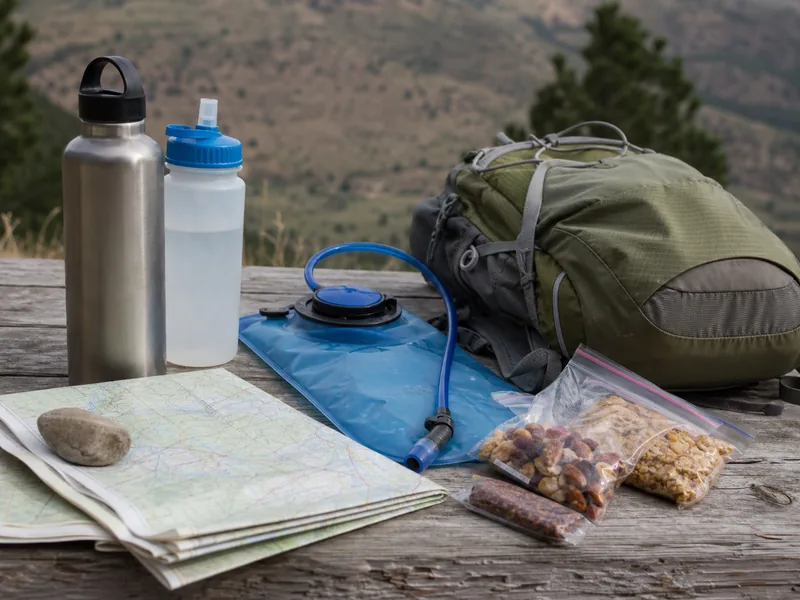
What does the math look like for real hikes?
Use the baseline as a quick estimate, then round up for the part of the route that will make you drink more. The goal is not a perfect number.
The goal is a number that still works if the hike runs slow.
A two-hour shaded walk in mild weather may start near 1 liter. A four-hour hot climb with no refill may start near 4 liters, then still need a reserve if the route is remote.
The calculation should protect the slow return, not just the first half.
| Example hike | Starting estimate | Why it changes |
|---|---|---|
| 2 hours, cool, shaded | About 1 liter | Mild effort near the floor |
| 3 hours, rolling trail | 1.5 to 2 liters | Time matters more than distance |
| 4 hours, hot climb | 3 to 4 liters | Heat and uphill push the rate up |
| 5 hours, no refill | Estimate plus reserve | Empty bottles remove turnaround options |
| Group with kids | Add shared margin | Stops and pace can stretch the day |
| 6 hours, cool, one refill | Carry to the source plus reserve | A refill lowers carried weight only when it is reliable |
| 3 hours, high altitude | Start above the flat-trail estimate | Dry air and greater effort can raise loss before thirst feels strong |
If the number feels too heavy to carry, change the route before you change the math. Pick a shorter loop, start earlier, choose shade, or use a verified refill point with treatment.
For a route with refills, calculate the longest dry segment, not only the total day. A six-hour hike with water at hour two still requires enough to reach that source, treat water there, and cover the four-hour dry return plus reserve.
Include planned stops in the elapsed time. A lunch break, slow filter, photo stop, or navigation delay still happens in the same heat even when the mileage counter is not moving.
Convert the final volume into containers before leaving. A 2.6-liter requirement needs three liters of usable capacity unless a verified source allows a smaller segment carry.
On a route with several sources, make a small ledger for each leg. Record start volume, expected use, refill volume, next dry distance, and reserve at the end of that leg.
A refill does not automatically reset the plan. Leave the source only after the next segment and reserve fit inside the containers you actually have, and keep enough water in hand to retreat if treatment fails.
Do one final time check with the slowest realistic pace. Published hiking times often exclude long rests, treatment stops, route finding, and the slower final descent.
How do season and terrain change the estimate?
Season changes water planning because the body loses fluid in different ways. Summer heat is obvious, but cold dry air, wind, altitude, and snow travel can also hide thirst until fatigue shows up.
Terrain changes the estimate because effort is not spread evenly. A route with one long climb, loose sand, snow, or no shade may need more water than a longer route with gentle grade and tree cover.
Plan water for the hardest hour, then make sure the total still covers the whole route.
| Setting | Water planning issue | Better adjustment |
|---|---|---|
| Hot desert trail | Sweat rises and shade is limited | Start early and carry more reserve |
| Humid forest | Sweat does not cool you well | Drink by time, not by thirst |
| Cold windy ridge | Thirst feels muted | Keep bottle reachable and sip on schedule |
| Snow travel | Effort rises and sources may be frozen | Carry water where it will not freeze |
| Sandy or loose trail | Pace slows and effort rises | Add time before calculating bottles |
| High altitude | Dry air and breathing increase loss | Drink by schedule and keep reserve visible |
| Coastal wind | Cool air can hide steady loss | Protect the bottle from sand and keep normal drink intervals |
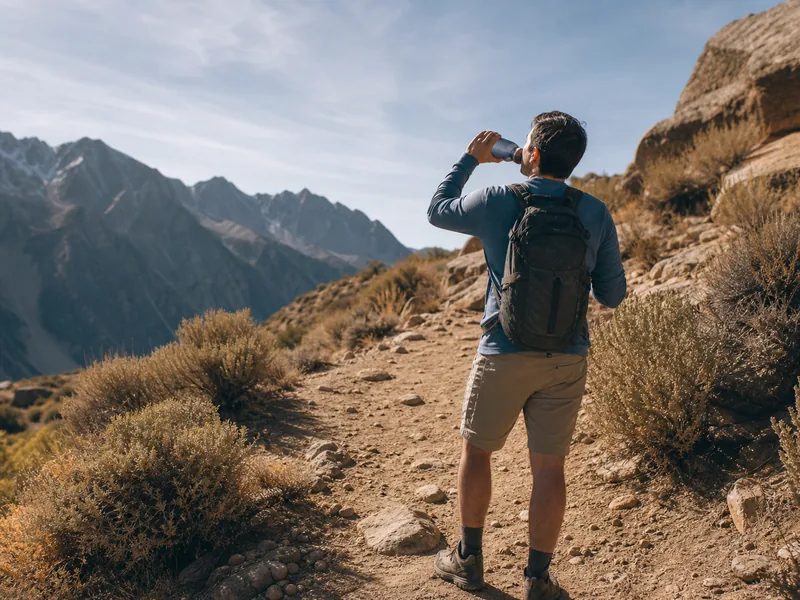
Humidity changes cooling more than the sight of sweat. When sweat stays on the skin instead of evaporating, you may feel soaked without cooling well, so slow the pace and shorten exposed work rather than relying on extra water alone.
Cold trips need a container plan too. Insulate bottles, store them upside down when freezing is likely, and keep one drinkable bottle inside the pack or clothing layers instead of assuming snow can become water instantly.
If the route includes both heat and climb, do not average them down. Treat that section as the part that controls the plan.
Wind can hide water loss too. On exposed ridges and dry desert trails, sweat may evaporate before your shirt feels wet, so thirst can lag behind what the body is losing.
Use scheduled sips in those conditions. Waiting until you feel strongly thirsty often means the water plan is already behind the effort.
This is especially true when a breeze keeps skin dry while effort stays high.
Plan for that hidden loss before the return feels harder.
How can you measure your own hiking sweat rate?
A short training hike can replace a generic estimate with your measured loss in similar conditions. Use the same pace, pack, terrain, temperature, and sun exposure that you expect on the planned route.
Weigh yourself before and after the test in the same dry clothing, or in minimal clothing after toweling off. Record the fluid you drink, any urine produced, and the exact test time.
Your own rate narrows the range, but it does not become a forced drinking quota.
- PrepareWeigh yourself, record bottle volume, and note weather, pace, clothing, and pack weight.
- HikeFollow a representative route for at least one hour without deliberately changing your normal drinking.
- FinishTowel off, change out of soaked clothing if needed, and weigh again under the same conditions.
- CalculateAdd kilograms of body mass lost to liters consumed, subtract urine produced, then divide by hours.
- RepeatTest again in different heat or effort before using one result for every trip.
One kilogram of body mass change is approximately one liter of water. If you lose 0.7 kilogram, drink 0.5 liter, produce no urine, and hike for two hours, the estimate is 0.6 liter per hour.
Use the result as a planning center, then carry a range around it. Scales, clothing moisture, food, bathroom timing, and short test duration all introduce error.
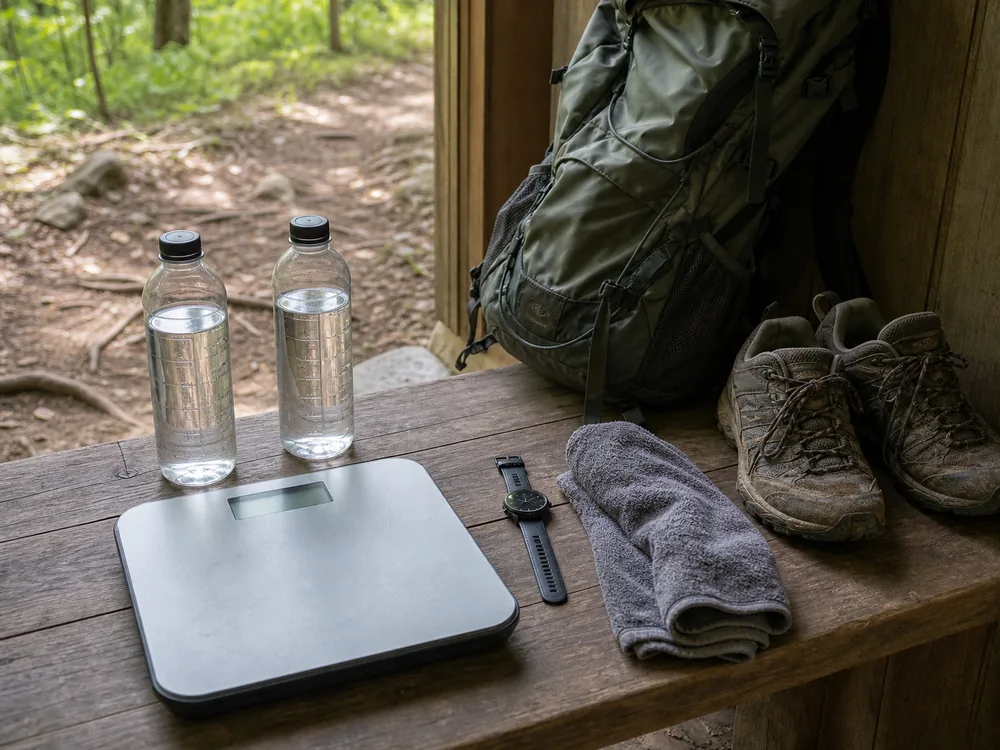
Repeat the test during a hiking training session when heat, humidity, pack weight, or pace changes sharply. Your cool-weather rate should not set the carry for a summer climb.
Do not try to replace every gram lost while moving. The useful result is a realistic starting range that prevents a shortage without encouraging you to drink beyond thirst.
Use the same scale and the same weighing routine each time. Wet clothes can hold enough water to distort the result, while a meal or large bathroom stop can move body mass for reasons unrelated to sweat.
Compare two or three similar tests before changing a normal carry. A repeated range is more useful than one unusually hot, windy, slow, or stressful outing.
When can a refill point count in the plan?
Count a refill only when a current, credible source says water is available and you have a way to treat it. Seasonal streams, old trip reports, and blue lines on a map are not enough by themselves.
A refill point is useful only if it is flowing, reachable, and treatable that day.
- Current source confirms water is present.
- The route actually passes the source.
- You know how far it is to the next source.
- You have a filter, purifier, tablets, or boiling plan.
- You carry enough to reach the source plus a margin.
- You have a backup if the source is dry or unsafe.
A working filter does not make every puddle usable. Ask whether the source has enough depth to collect from, whether livestock or runoff creates a contamination concern, and whether the treatment method handles the likely organisms.
Treatment speed belongs in the schedule. If one small filter takes several minutes per liter for a group, the refill stop may add enough time to change heat exposure and the water needed for the next segment.
Carry a dirty-water bag or extra bottle capacity when the source is shallow or far from camp. You may need to collect water once, move to a safer place, and treat it away from the bank.
Protect the treatment method itself. A hollow-fiber filter that froze while wet may be damaged even when no crack is visible, chemical tablets need enough contact time, and a UV purifier needs a charged battery and reasonably clear water.
Carry one backup treatment method on remote routes. The backup earns its place because a filter clog, broken bag, dead battery, or spilled chemical dose otherwise turns available water into unusable water.
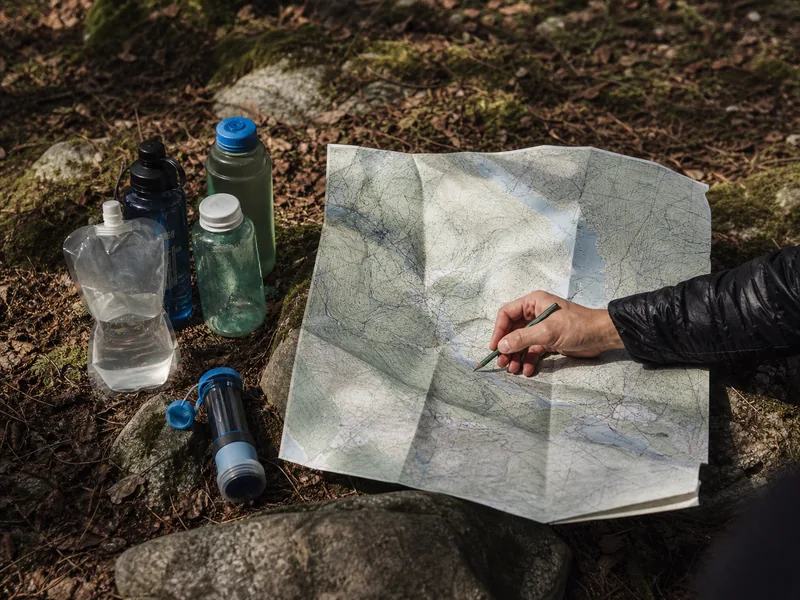
Place and trail pages can help with context, but dynamic water facts need current verification. Destination profiles and trail profiles are planning inputs; managing agency guidance confirms the current water facts.
How should groups split water?
Each adult should carry enough personal water to make basic decisions without depending on someone else's bottle. Shared reserve is useful, but it should not hide that one person is already short.
For kids, dogs, or new hikers, carry extra margin with the strongest adult and schedule drink breaks before anyone asks. Slow groups often spend more time in heat than the route estimate suggests.
Shared water is a backup, not a reason for one person to start under-supplied.
Check remaining volume at known landmarks instead of asking whether everyone feels fine. A bottle count at the first junction, turnaround point, and final dry segment reveals an imbalance before the strongest hiker becomes the only reserve.
Keep emergency margin in more than one pack. A separated group, dropped bottle, or leaking reservoir should not erase the whole backup.
Solo hiker
Carry the full estimate and reserve yourself.
Two adults
Each carries personal water, then split emergency margin.
Kids
Adults carry extra because kids may forget to drink early.
Dog hike
Bring separate dog water and a bowl, not just leftover human water.
Hot group day
Put reserve with someone who will not drink it casually.
Large group
Keep a usable reserve with more than one responsible adult.
What if the safe amount is too heavy?
If the safe amount feels too heavy, the route is asking for a different plan. Shorten the mileage, start cooler, pick a route with verified water, or choose a trail with more shade.
Do not solve a heavy water problem by carrying too little. That only moves the cost from your shoulders to your judgment late in the hike.
When the water number does not fit the pack, change the trip before the trip changes you.
Pros
- Shorter route keeps the water estimate realistic
- Earlier start lowers heat and sweat loss
- Verified refill can reduce carry weight
Cons
- Guessing on seasonal water can leave you dry
- Dropping reserve removes your easiest safety margin
This is where planning and gear meet. A comfortable pack helps with water weight, but it cannot make an unsafe water plan safe.
Check that the pack and containers can physically hold the calculated volume without crushing food or pushing dense water far from your back. If the capacity is not there, that is another reason to change the route or add a verified refill.
Some water stays untouched until the walk out
Carry a margin for delays, wrong turns, hot weather, and slower group pace.
For many day hikes, 0.5 to 1 liter extra is a practical buffer.
Your reserve is for the walk out, not for feeling generous at the trailhead.
Carry enough to make the return while the choice is still easy.
Water planning rule
Do not drink the reserve early just because the pack feels heavy. If you are halfway through the route and more than halfway through your water, shorten the day.
Define the reserve trigger before leaving. Once the group opens that protected volume for normal drinking, the original route is over unless a nearby verified source or exit restores the margin.
Navigation mistakes can turn water math into a safety problem. Basic compass skills help you avoid adding unplanned miles.
The carry system decides whether you actually drink
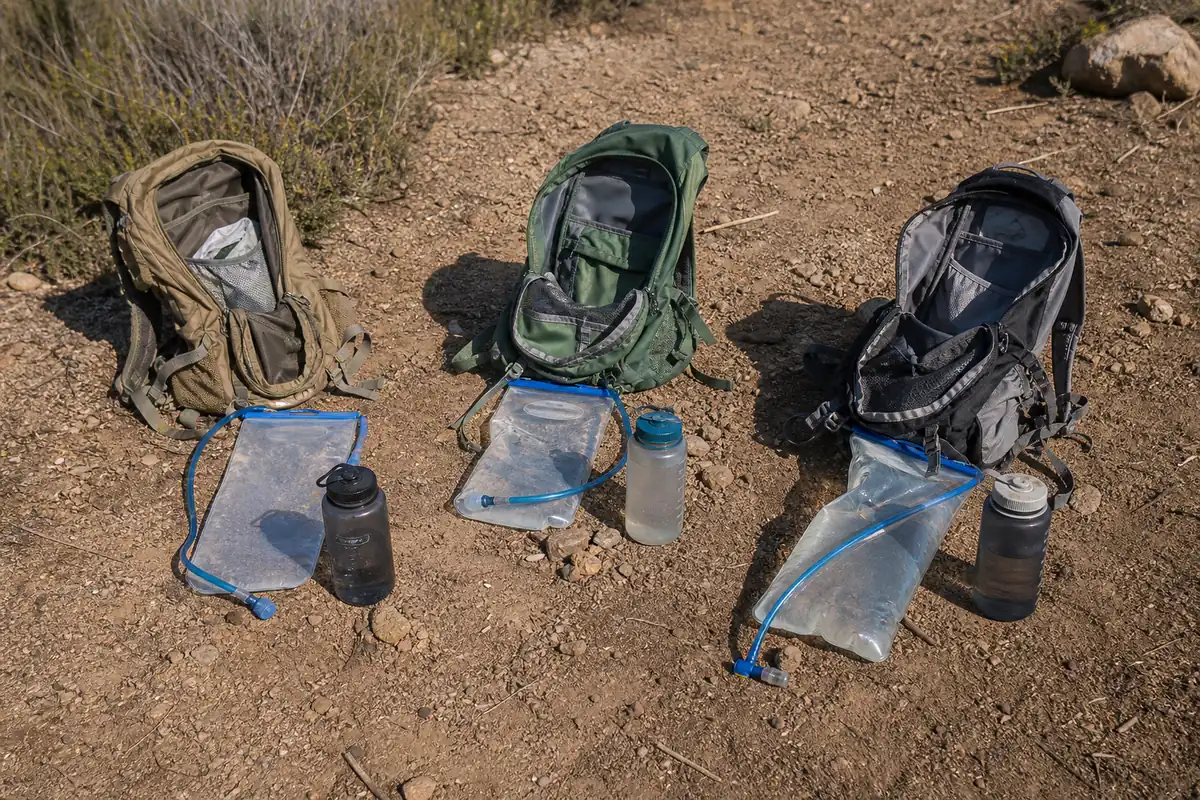
Carry water where you can reach it without stopping. Bottles make it easy to see what is left, while a reservoir makes sipping easier during steady walking.
The best system is the one that makes you drink before strong thirst.
Bottles
Easy to track, share, refill, and clean.
Reservoir
Easy to sip while walking, harder to see remaining volume.
Soft flask
Light backup for treated water or short exposed sections.
Wide-mouth bottle
Easier to fill from shallow sources.
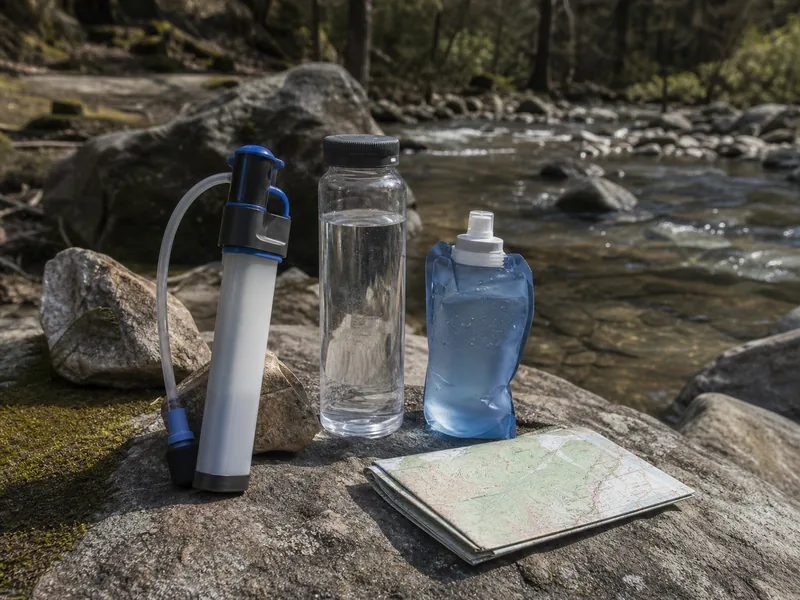
If you bring a filter or tablets, count the time and effort to use them. A filter buried under clothes is not a real refill plan when the group is hot, tired, and standing in sun.
Carry at least enough water to reach the source comfortably. Then treat water before bottles are empty, because filtering from zero creates pressure to accept a bad source or rush the process.
Mark bottle volumes or learn the reservoir's shape at one-quarter intervals. A quick visual or hand check is more reliable than guessing from sloshing.
Inspect caps, hoses, bite valves, and soft-flask seams before departure. A slow leak can remove a liter without creating an obvious single failure.
Treatment gear reduces carried weight only when the source is real and you use it before the margin is gone.
Pack weight matters when you carry several liters. A fitted backpack keeps water close to your back instead of swinging with every step.
Can carrying and drinking too much water be dangerous?
Yes.
Forcing water beyond what your body can clear can dilute blood sodium during prolonged exercise. The risk is called exercise-associated hyponatremia, and recreational hikers can develop it as well as endurance athletes.
The hourly range in this article estimates carry capacity. It does not require you to empty a bottle on schedule when you are not thirsty.
A range is not a quota. Use thirst, your measured pattern, conditions, food, and remaining route time together.
The CDC notes that excessive water intake is a major contributor to this problem. Headache, nausea, bloating, unusual fatigue, confusion, seizures, or worsening mental status after heavy fluid intake need urgent medical help rather than more forced water.
For mild to moderate exertion, plain water with normal meals is often enough. During many hours of hard work in heat, carry familiar salty foods because sweat also removes sodium.
Sports drinks are not permission to overdrink, and salt tablets can cause nausea or vomiting. Avoid inventing a fixed sodium dose on trail unless a qualified clinician has given you a personal plan.
If someone develops confusion, seizures, or major coordination changes, stop the hike and activate emergency help. Several heat and fluid problems can look alike, so field guessing should not delay evacuation.
When should water force a route change?
Turn around or shorten the route when water use is running ahead of the plan. Waiting until bottles are empty removes the easy choices.
Compare the consumption rate with the distance and time still ahead. If 60 percent of the usable water is gone with half of the hardest dry segment remaining, the route has already crossed the planned margin.
Treat a failed refill as a route event, not a minor inconvenience. Recalculate from the water physically in hand and choose the shortest safe exit before opening the reserve.
Low water is a route decision, not just a comfort problem.
| Signal | What it means | Better move |
|---|---|---|
| Half your water is gone before halfway | The pace or heat is higher than planned | Turn around or shorten the route |
| No confirmed refill ahead | The next source is a guess | Keep enough to return |
| Someone stops drinking | Fatigue or nausea may be building | Rest, shade, and reassess |
| Hot climb still ahead | Demand is about to rise | Save margin or choose a shorter line |
| Water tastes unsafe | Treatment or source is questionable | Do not count it as reliable |
Cold weather does not remove the need to drink. Dehydration adds fatigue, and fatigue can make hypothermia signs easier to miss.
Longer hiking and trekking plans need a stricter refill strategy because a mistake can affect more than one day.
Step by stepPractical steps
- Estimate hours of hiking and expected heat.
- Budget 0.5 to 1 liter per hour.
- Map reliable refill points along the route.
- Carry to the next reliable source plus a margin.
- Turn around if water use runs ahead of the plan.
AnswersQuestions readers ask
Can I rely on streams to refill?
Only when a current, credible source confirms the water is flowing. Treat all backcountry water before drinking.
How much water should I carry for a two-hour hike?
In mild weather, one liter may be enough for many hikers. Carry more in heat, on climbs, or when you want a stronger safety margin.
Are bottles or hydration reservoirs better?
Bottles are easier to track and refill.
Reservoirs make sipping easier while walking. Choose the system that helps you drink consistently.
How much extra water should I carry?
For many day hikes, add 0.5 to 1 liter beyond the estimate. Add more when the route is hot, remote, exposed, or refill points are uncertain.
Do I need to treat clear stream water?
Yes.
Clear water can still carry organisms that make you sick. Treat backcountry water unless an official source says it is potable.