
Which Backcountry Water Filter Do You Actually Need?
Match the treatment to the organisms in your water, then to how you collect it.
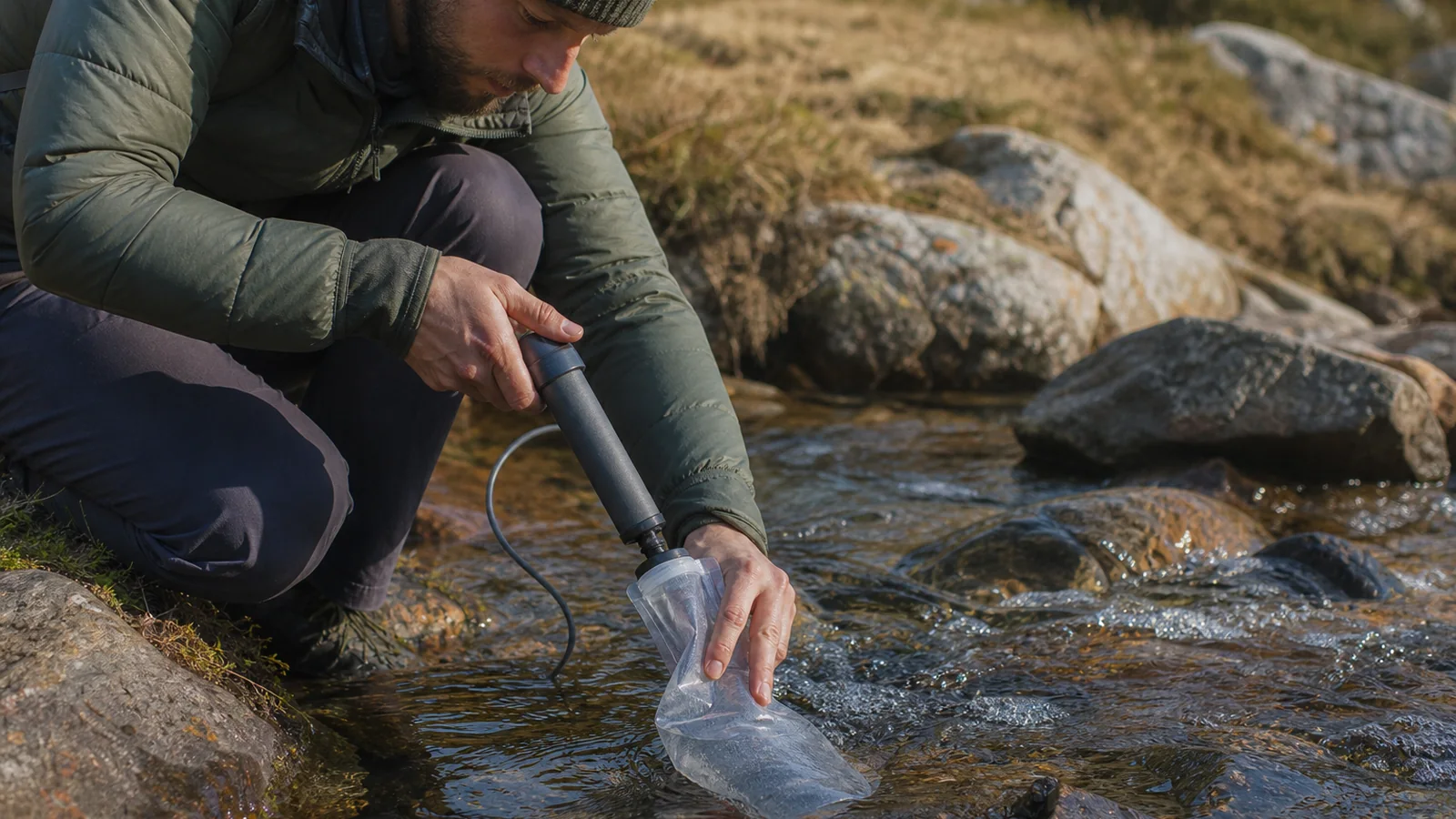
The right water filter starts with the organisms in the water you drink, not the brand on the box, so match the treatment to the threat and let style and flow follow.
Choose a water filter by the organisms in the water you will actually drink, then by how you like to collect and carry it. Clear mountain water can still hold parasites that take days to make you sick, so the filter is cheap insurance against a trip-ending illness.
Start with what treatment is for, because the threat decides the tool.
Water that looks and smells clean can still carry germs that cause diarrhea, vomiting, and cramps. Backcountry water should be treated to remove or kill Giardia, Cryptosporidium, and bacteria before you drink it.
U.S. Centers for Disease Control and Prevention
A filter strains organisms out of the water through tiny pores, while a purifier also kills viruses that slip through a filter. Which one you need depends on where you travel, so the first question is not which brand but which threats you face.
Which pathogens does your water actually carry?
Three groups of organisms make backcountry water unsafe, and they differ enough in size that no single method is automatic. Match the method to the smallest thing you need to remove where you hike.
Protozoa like Giardia and Cryptosporidium are the main threat in North American backcountry water, and they are large enough for any filter to catch. Bacteria such as E. coli and Salmonella are smaller but still caught by a standard filter. Viruses like norovirus and hepatitis A are far smaller, rare in remote wilderness, and a real concern mainly where human sewage reaches the water.
Giardia is the most common culprit and the sneakiest, because its symptoms can take one to three weeks to appear, long after you have forgotten the stream you drank from. By then the cramps, bloating, and days of diarrhea can drag on for weeks without treatment. That delay is exactly why some hikers skip treatment and seem to get away with it, then pay for it later, so the habit of treating every source is worth more than any single filter's spec.
| Pathogen group | Examples | Size | Removed by |
|---|---|---|---|
| Protozoa | Giardia, Cryptosporidium | 2 to 50 microns | Any filter |
| Bacteria | E. coli, Salmonella | 0.2 to 5 microns | Standard 0.2 micron filter |
| Viruses | Norovirus, hepatitis A | 0.02 to 0.1 microns | Purifier only (UV, chemical, or virus-rated) |
In United States and Canadian wilderness, a filter that stops protozoa and bacteria covers nearly every trip. If you travel where water may carry human waste, from a village-lined trekking route to a developing region, you need virus protection on top of a filter. Planning an international trekking route is the clearest case for carrying a purifier rather than a plain filter.
Treating water at the source also changes how much you haul between refills. When you trust the water you find, you carry less on your back and top up along the way, which ties the filter to your plan for how much water to carry on a dry stretch.
Cryptosporidium is the reason a filter beats chemical drops alone in North America. Its tough outer shell shrugs off the chlorine and iodine that kill most bacteria, so it can ride out lightly treated water for days. A physical filter simply strains it out, which is why filtering is the backbone of backcountry treatment even where the water looks pristine.
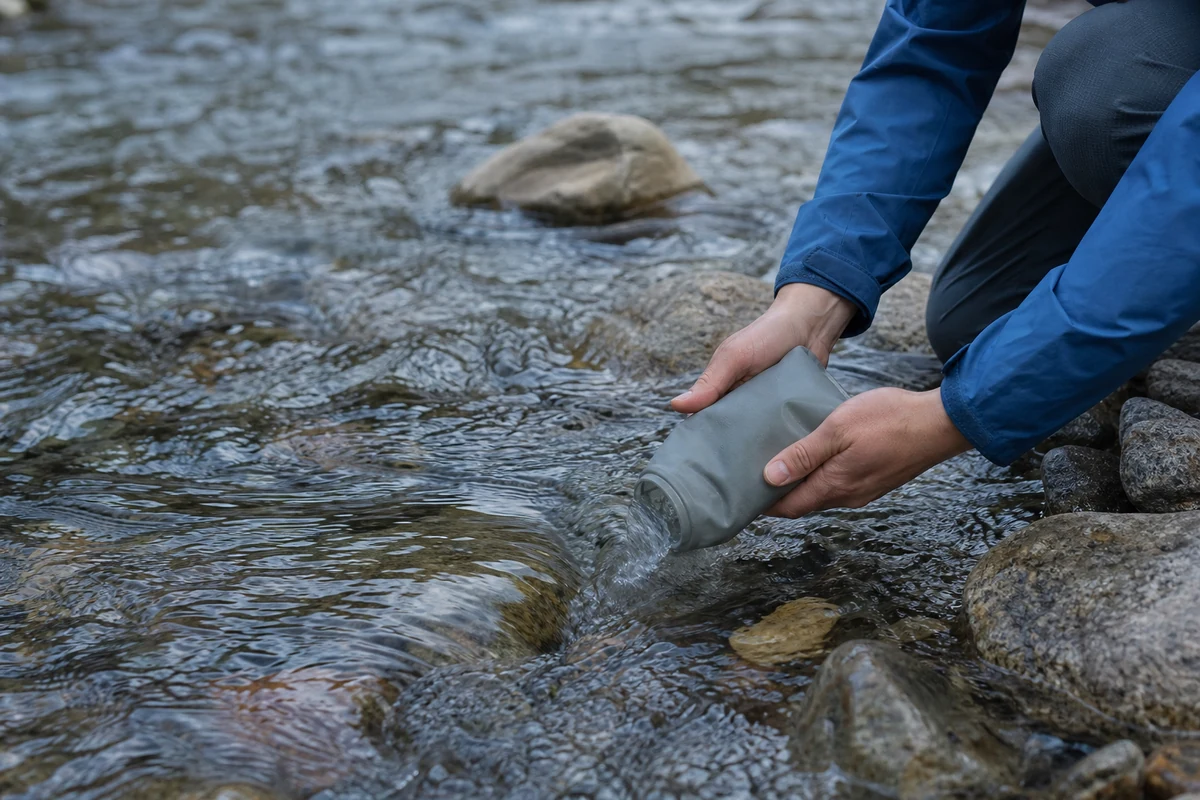
What kind of filter fits how you collect water?
Pick the filter style by how you gather water and how many people you treat for, because the mechanism decides the effort more than the price. The same 0.2 micron protection comes in shapes that suit very different trips.
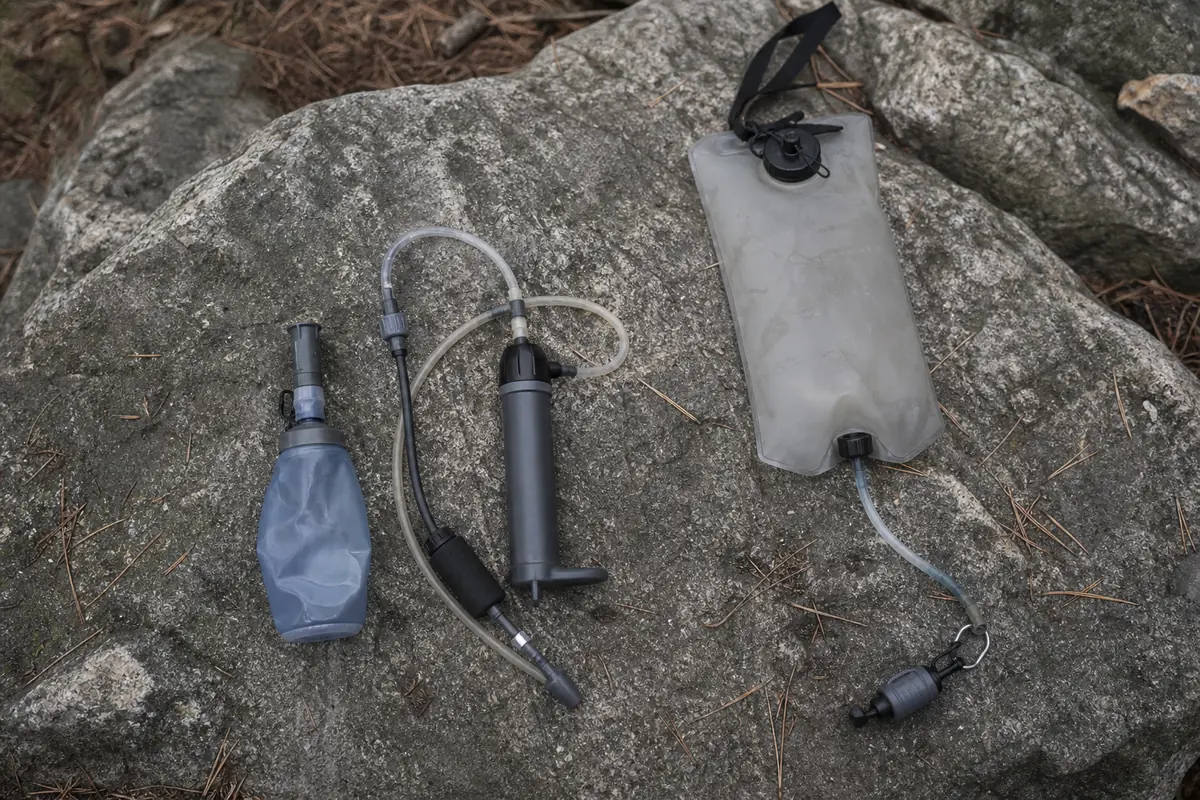
Each type moves water through the filter a different way, so the right one depends on your group size, your patience, and your water sources. The rundown below sorts them by how they fit real trips.
Squeeze filter
- Best for
- Solo and light trips
- Why it ranks
- Screws onto a soft flask; squeeze and drink in seconds
- Keep in mind
- Slows as it clogs, needs regular backflushing
Pump filter
- Best for
- Shallow or tricky sources
- Why it ranks
- Draws from a puddle-deep source and works fast
- Keep in mind
- Heaviest and has the most moving parts to break
Gravity filter
- Best for
- Groups and basecamps
- Why it ranks
- Fill a bag, hang it, and let it run hands-free
- Keep in mind
- Bulky and slow to fill from a thin trickle
Bottle filter
- Best for
- Day hikes and travel
- Why it ranks
- Filter built into a bottle you drink straight from
- Keep in mind
- Small capacity and limited to one person
Straw filter
- Best for
- Emergency backup
- Why it ranks
- Drink directly from the source, very light and cheap
- Keep in mind
- Cannot store treated water for later or for cooking
A squeeze filter suits most solo backpackers because it is light, fast, and simple. A gravity system earns its bulk once you treat water for three or more people, since it works while you set up camp. Match the style to how you already move, and think about how it packs alongside the rest of your backpacking kit.
On a short outing, a bottle filter you drink straight from can be enough on its own. It slips in with a day hike's essentials and skips the separate collect-and-squeeze step that a longer trip needs.
Reliability also splits along the same lines. A squeeze, straw, or gravity filter has no moving parts to fail, while a pump adds a handle, seals, and O-rings that can wear or crack far from any store. On a long or remote trip, fewer moving parts means one less thing to troubleshoot when the nearest replacement is days down the trail.
Pore size decides what a filter removes
Pore size is the real spec behind the marketing, and it tells you exactly what a filter can and cannot stop. A filter rated at 0.2 microns blocks protozoa and bacteria, which are the everyday backcountry threats.
The number is an absolute pore size, meaning the largest gap water can pass through. Anything bigger than the pore is trapped, and anything smaller can slip past, which is why the same 0.2 micron filter that stops bacteria does nothing against a virus a hundred times smaller.
- 0.2 microns
- Standard filter, stops protozoa and bacteria
- 0.1 to 0.2 microns
- Tighter filters, same protozoa and bacteria protection
- 0.02 microns
- Virus-rated ultrafilter, rare and slower
- Viruses need
- A purifier, not a finer filter, in almost all cases
- Look for
- An absolute pore rating, not a vague "removes 99.9 percent"
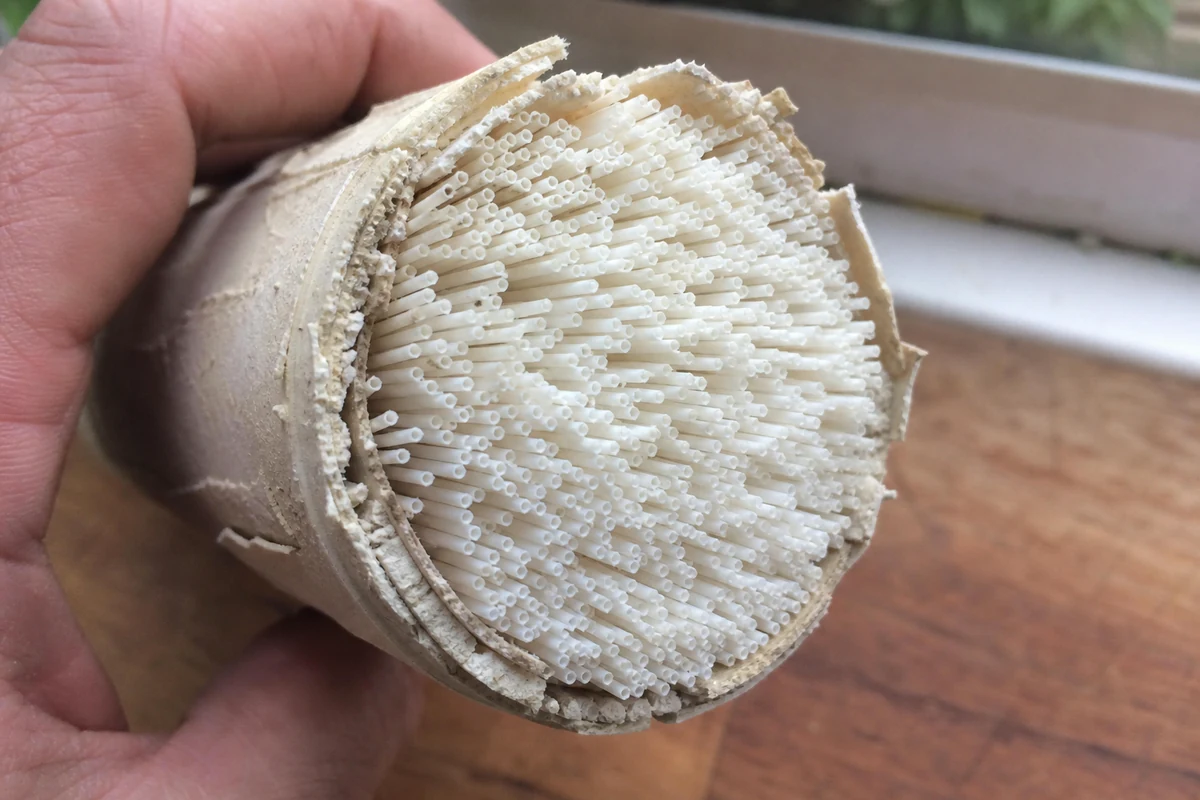
Most quality filters use hollow-fiber membranes, a bundle of tiny straws with pores in their walls. The design gives a lot of surface area in a small, light package, and it is why a modern squeeze filter can weigh only a few ounces. A hollow-fiber filter also fails safe when it wears out, slowing to a trickle rather than silently letting water through.
A few filters use other media for different jobs. Ceramic elements can be scrubbed clean and reused for years, trading weight for a long life, while an activated-carbon stage adds no pathogen protection but pulls out the tastes, odors, and some chemicals a hollow-fiber filter leaves behind. Match the media to the water, since carbon is wasted effort on a clean alpine creek and worth carrying downstream of farmland.
How fast does it flow, and will it clog?
Flow rate is how quickly a filter delivers drinkable water, and it drops as the filter does its job. A new filter might flow a liter a minute, then slow steadily as trapped sediment fills its pores.
Silty, murky, or glacial water clogs a filter fastest, so how you handle dirty sources matters as much as the filter's rating. A little care at the source keeps the flow up and stretches the filter's life across more trips.
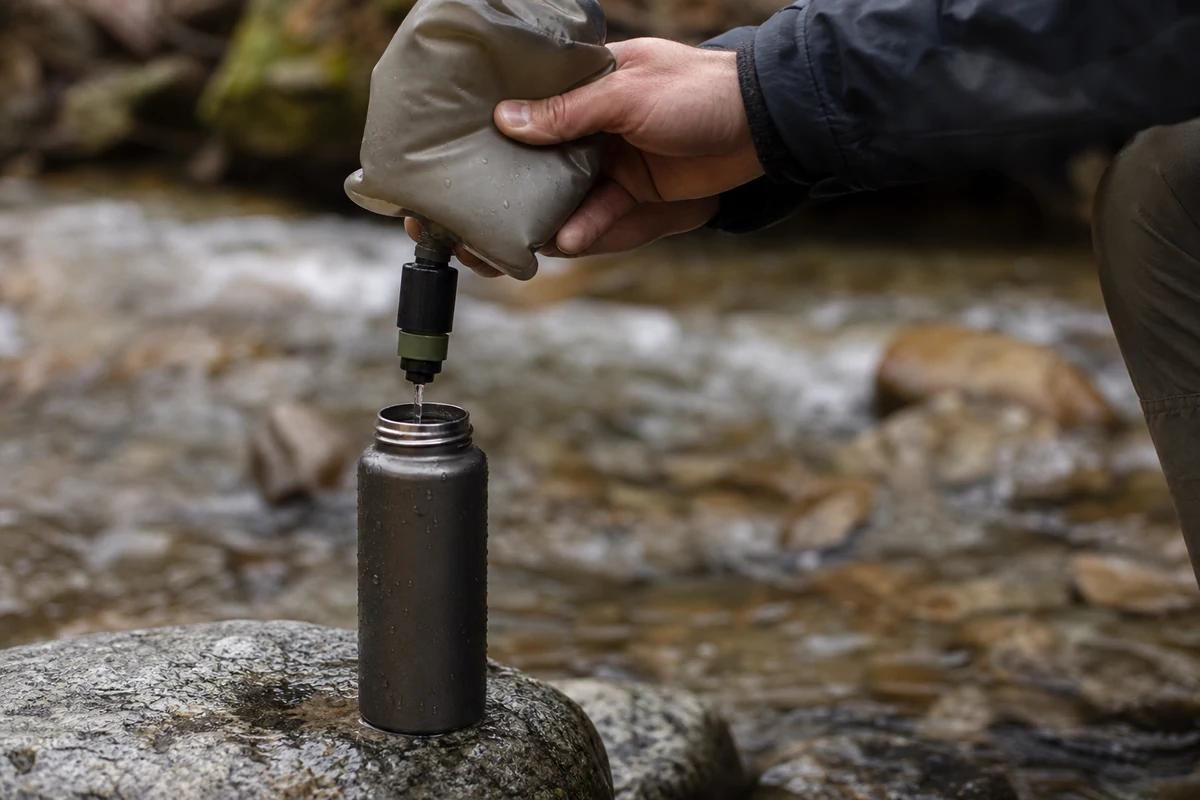
- Pick the clearest waterDraw from a flowing, sediment-free spot rather than a stirred-up bank.
- Let silt settleFill a bottle and wait so grit sinks before you filter the top.
- Use a prefilterA cloth or built-in screen catches the coarse debris that clogs the membrane.
- Backflush in the fieldPush clean water backward through the filter to clear trapped sediment.
- Store it clean and dampKeep the filter from drying out crusty between trips so flow stays high.
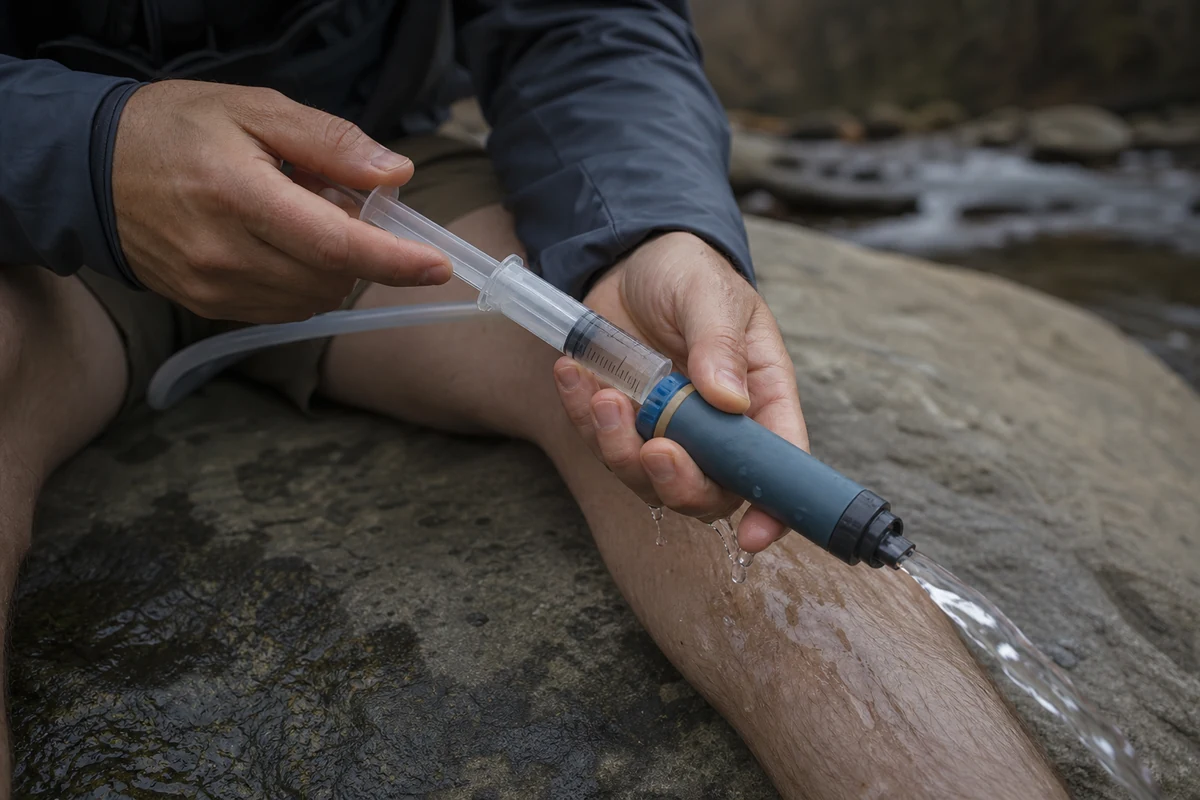
A filter that has slowed to a crawl is usually clogged, not worn out, and a backflush often brings most of the flow back. Carry the syringe or backflush tool your filter comes with, because a slow filter on a hot afternoon turns every water stop into a chore when you are already hiking in the heat and drinking more.
Lifespan is the other half of the flow story. A cartridge is rated for a set number of liters, from a few thousand on a light squeeze filter to many thousands on a pump, after which it can no longer be trusted. Dividing the price by that rated volume gives a cost per liter that often matters more than the sticker price, since a cheap filter with a short-lived cartridge can cost more across a season than a better one.
Filter, purifier, or chemical: which do you need?
Decide between a filter, a purifier, and chemical treatment by your virus risk and your tolerance for waiting. A plain filter is enough for most wilderness, a purifier adds virus protection, and chemicals are a light backup that trade speed for simplicity.
Purifiers handle viruses in ways a filter cannot. An ultraviolet purifier stirs a wand in the water to scramble the organisms, which is fast and leaves no taste but needs batteries and clear water to work. Chemical drops or tablets of chlorine dioxide kill everything given time, weigh almost nothing, and make a fine backup, though they can take up to four hours to defeat Cryptosporidium and leave a faint taste.
Pros
- A filter is fast, needs no batteries or wait, and removes protozoa and bacteria.
- A UV purifier adds virus protection quickly and leaves no chemical taste.
- Chemical tablets are nearly weightless and make a reliable backup with no moving parts.
Cons
- A plain filter does nothing against viruses in contaminated water.
- UV needs batteries, clear water, and careful timing to work.
- Chemicals are slow against Cryptosporidium and add a taste some people dislike.
Many careful hikers carry a filter as the daily tool and a few chemical tablets as an emergency backup, which covers a broken filter without much weight. If you count grams toward a lighter carried load, a squeeze filter plus a small bottle of tablets is a light, fault-tolerant system.
Boiling is the surest method when fuel allows. A rolling boil for one minute, or three minutes above about 6,500 feet, kills everything including viruses, which makes it a solid fallback when a filter clogs or freezes. It costs fuel and time, so it suits a stove-equipped camp more than a fast-and-light day, and it pairs naturally with the heavier setup in a car-camping kit.
The three ways a filter fails in the field
A hollow-fiber filter has one hidden weakness, which is freezing. Water left in the membrane expands as it freezes and cracks the tiny fibers, and a cracked filter lets unfiltered water through without any warning you can see.
Dropping a filter on rock can also crack the housing or the cartridge, so a filter that has taken a hard fall deserves a careful look. Beyond cold and impact, the ordinary end of a filter's life is a clog that will not clear, which is your cue to replace the cartridge.
Protecting the filter from cold and hard knocks belongs with the rest of your backcountry safety habits, because a filter that fails silently is worse than one that visibly breaks.
Between trips a filter needs the same care that keeps it flowing on the trail. Backflush it, dry it fully so nothing grows inside, and store it where it cannot be crushed or frozen. When a backflush no longer brings the flow back and the filter runs slow from the first liter, the cartridge has reached the end of its rated life, and replacing it beats fighting it on the next trip.
Check the whole system before you buy
Weigh the whole system, not just the cartridge, because the pump body, hoses, or gravity bag are where the grams hide. A squeeze filter and flask might weigh three ounces, while a pump with its hoses can run a pound, and that difference rides on your back all day.
Weight matters less if you drive to the trailhead. A car-camping filter can be a heavier, higher-volume gravity system, so match it to the trip rather than defaulting to the lightest option a backpacker would choose.
Check the cartridge lifespan and the cost to replace it, since a cheap filter with a short-lived or pricey cartridge can cost more over a season than a better one. Run through a short list before you commit.
- Pathogen protection matches where you hike, with virus protection only if you need it
- Filter style fits your group size and how you collect water
- Total system weight, not just the cartridge, suits your trips
- Cartridge lifespan in liters and the replacement cartridge price
- A backflush or cleaning method you will actually use in the field
- Freeze and drop resistance for the conditions you expect
Spend first on protection that matches your water and a style you will use without complaint, because the best filter is the one you treat every source with. For a first backpacking trip in North American wilderness, a 0.2 micron squeeze filter covers the real threats, packs small next to the rest of your gear, and leaves chemical tablets as a cheap backup.
Sources
The CDC guidance on backcountry water treatment explains which organisms make untreated water unsafe and how filtering, ultraviolet light, and chemical treatment differ against protozoa, bacteria, and viruses. The REI guide to water filters and purifiers breaks down filter types, pore-size ratings, flow rates, and field maintenance across backcountry conditions.
AnswersQuestions readers ask
Do I need a filter or a purifier for backpacking?
In United States and Canadian wilderness, a 0.2 micron filter that removes protozoa and bacteria covers nearly every trip. You need a purifier, which also kills viruses, mainly where water may carry human sewage, such as many international trekking routes.
Will a water filter remove viruses?
Almost never. Standard filters stop protozoa and bacteria but their 0.2 micron pores are far too large to catch viruses. To remove viruses you need a purifier that uses ultraviolet light, chemicals, or a virus-rated ultrafilter.
What micron rating do I need in a water filter?
A 0.2 micron absolute rating is the standard, blocking Giardia, Cryptosporidium, and bacteria. A finer rating does not help against viruses, which are a hundred times smaller and need a purifier instead of a tighter filter.
How do I keep my water filter from clogging?
Draw from the clearest water you can, let silty water settle before filtering the top, use a prefilter on murky sources, and backflush regularly. A filter that has slowed is usually clogged, not worn out, and a backflush often restores most of the flow.
Can a frozen water filter still be used?
No. Freezing can crack the hollow fibers inside a filter, which then lets unfiltered water through with no visible sign. There is no field test that proves a frozen filter is safe, so keep it from freezing and retire any filter you suspect has frozen.