
Camping With Kids Works Better Around Bedtime
Choose the site, schedule, adult roles, food, lighting, and next-day plan around the child's shortest urgent need.
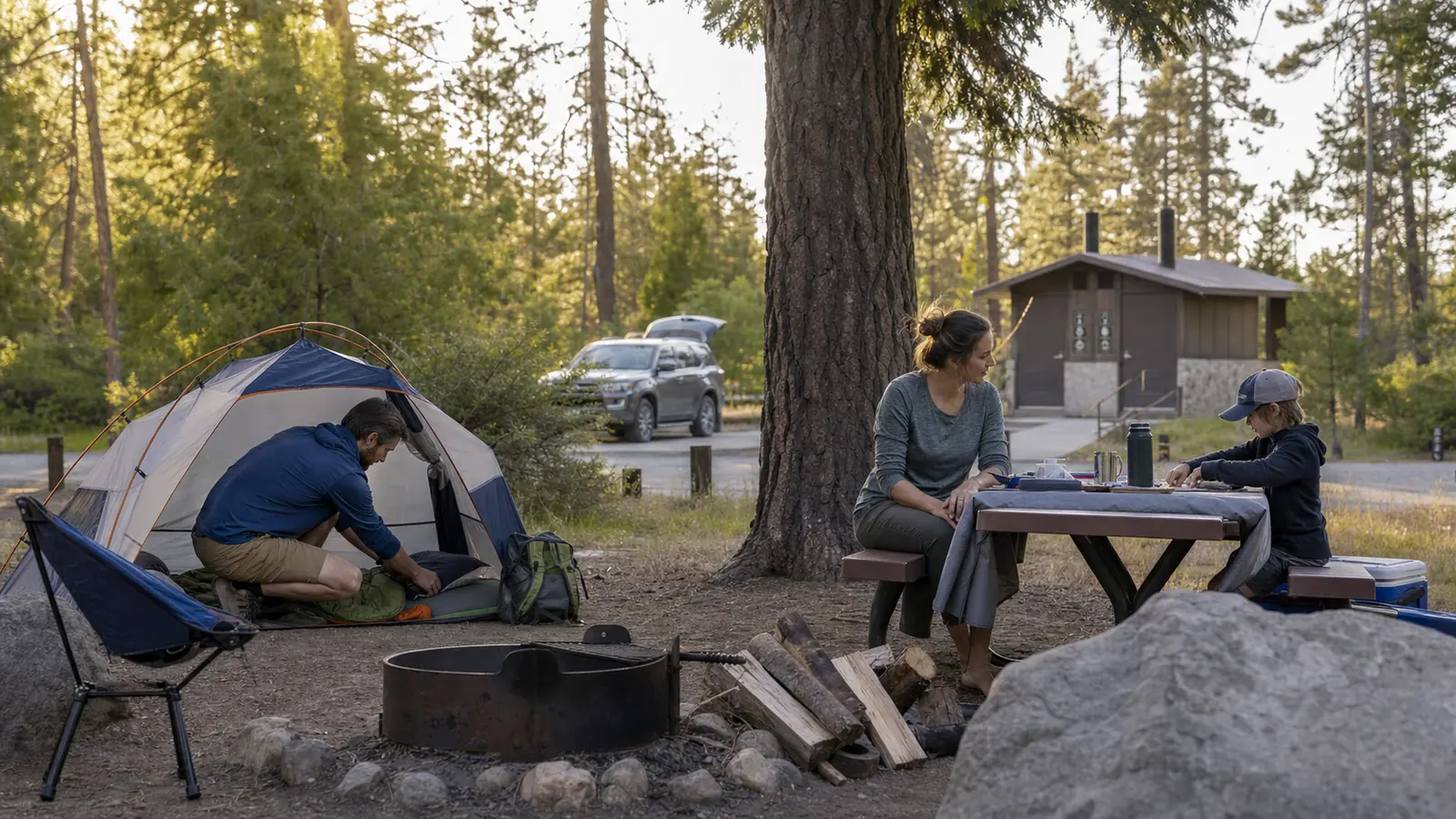
Start camping with kids at a legal developed campground for one night. Keep toilets, water, the vehicle, familiar food, warm sleep gear, and an easy exit close enough that adults can solve a child's need before it becomes a rushed camp problem.
The camping basics become child-sized when the first night preserves routines the child already understands. Familiar food, a known bedtime sequence, warm sleep gear, clear adult supervision, and a short route home matter more than a full activity schedule.
The child does not need to prove a love of camping. The first trip only needs to remain calm, warm, fed, supervised, and easy to leave.
Keep the first promise small so the family can learn what the child actually needs outdoors.
A first family camp is a test, not a holiday
Use one night to test arrival, dinner, toilet trips, sleep, breakfast, and packing. More days repeat every weak point before the family has learned how to fix it.
Choose familiar food and a normal sleep window. A late special dinner can sound fun at home but remove the exact time needed to settle an overtired child in an unfamiliar tent.
Bring one small comfort item that already supports sleep. It should fit inside the dry system and should not be the only way the child can calm down.
Success is practical. The child can eat, use the toilet, stay warm, sleep enough to function, and leave without a crisis or a lost essential item.
Choose one or two measures of success that a child can understand. The goal for beginner family camping can be one familiar dinner, one supervised toilet trip, part of a night's sleep, and one morning task.
Tell the child what will happen in order.
Arrival, shelter, bed, food, toilet, quiet play, and sleep form a short sequence. When plans change, explain the next concrete step instead of promising that everything will be fun.
Routine is useful evidence. It shows whether the campsite or the schedule caused the problem.
Pick the site for the urgent midnight walk
Imagine a toilet trip after dark. The route should be easy to identify, free of vehicle conflicts, and short enough that an adult can accompany the child without searching for shoes, lights, or directions.
Check the real distance from parking to the pad. The first camping trip should not depend on a drive-in label that hides a barrier or long walk-in spur.
| Site fact | Why it matters with children | What to verify |
|---|---|---|
| Toilet route | Urgent trips happen after dark | Distance lighting steps and road crossings |
| Potable water | Refills and cleanup take adult time | Current operation and exact location |
| Vehicle access | Supports a calm early exit | Parking position gate hours and keys |
| Site boundary | Children need a visible play limit | Roads drop-offs water and neighboring pads |
| Quiet setting | Sleep may begin before quiet hours | Traffic generators events and group areas |
| Staff or host | Questions and site problems are easier to resolve | Current hours and contact method |
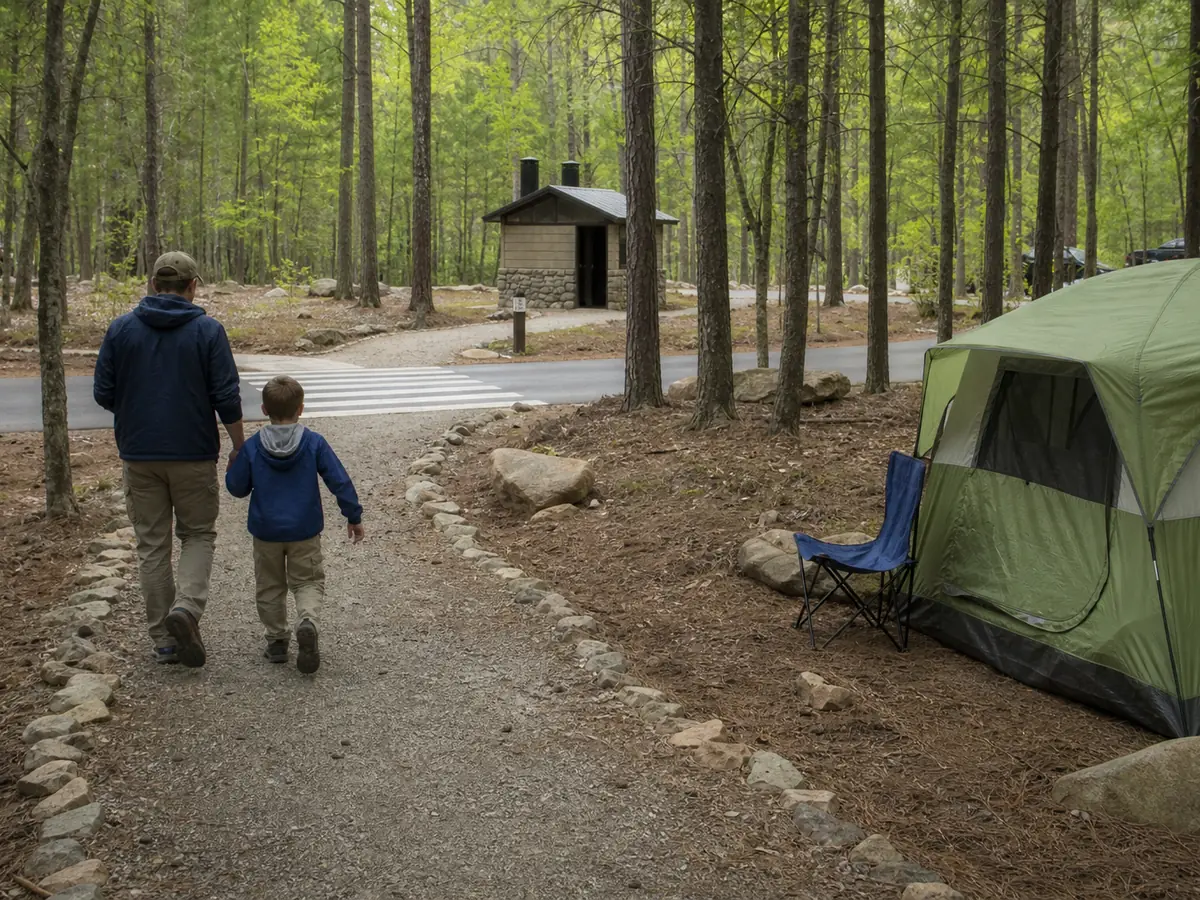
Look above the pad for damaged branches and across the ground for drainage, fire, traffic, and tripping hazards. A site close to a toilet is still wrong if the child must cross moving vehicles or unstable ground.
The least experienced child sets the site limit. A scenic edge, steep bank, deep water, or busy loop can demand more supervision than the adults can provide while also cooking and building shelter.
Ask what happens when the child wakes suddenly, becomes sick, or needs the toilet during rain.
The adult may need to carry the child while holding a light and opening doors. Test whether that route works with one free hand.
Look at traffic as well as distance. A nearby toilet across an active campground road may be harder than a slightly farther one on a protected path.
Identify where a child must hold an adult's hand and where a stroller or mobility aid can actually pass.
Choose for the urgent walk rather than the best photograph.
How should a child rehearse the camping bed?
Set up the actual tent and bed at home. Let the child enter, leave, lie down, hear the fabric move, and find the light and footwear.
Test the whole sleep system for the expected low. The sleeping pad insulates below, the bag or quilt manages the top and sides, dry layers protect the body, and shelter ventilation limits moisture.
Cold
Check pad insulation bag fit dry clothing and overnight low.
Fear
Keep the adult position light exit and bedtime words predictable.
Noise
Explain wind fabric wildlife and neighboring sounds before dark.
Bathroom
Place shoes light and adult access in the same known positions.
Restlessness
Protect normal bedtime instead of adding more evening activity.
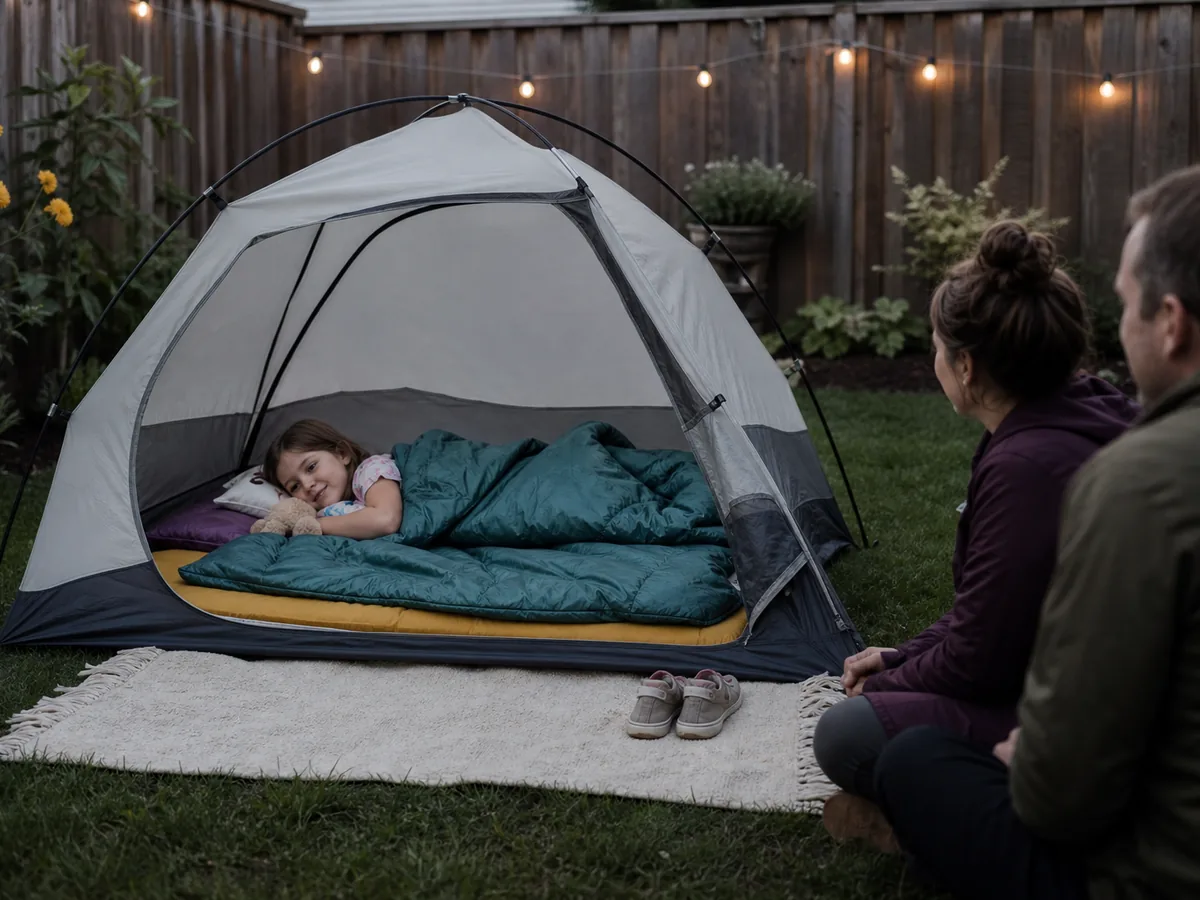
Do not promise silence. A campground has doors, footsteps, animals, wind, voices, and vehicles, but the child can learn which sounds are ordinary and which require an adult response.
Keep one dry child layer sealed until bed. Clothing used for play, cooking, or wet grass should not become the sleep layer.
Rehearse the whole bedtime, not just lying in the tent for ten minutes. Use the actual camping packing list for clothing, light, comfort item, footwear, and sleep equipment so the home test exposes missing pieces.
Check insulation from below because a soft bed is not always a warm bed. Use age-appropriate equipment as directed by its maker, keep the child's face clear, and apply the no-combustion rule used in winter camping.
The bed should feel known before the surroundings become new.
How should adults hand off supervision during setup?
The busiest period starts when everyone arrives and both adults want to unload. A child can move toward a road, water, fire ring, another campsite, or an unstable area while attention is split.
Name one supervising adult before doors open. That person establishes the boundary, keeps the child close, and handles immediate toilet, water, or snack needs.
- Pause in the vehicleExplain the site boundary and first task before opening doors.
- Assign supervisionOne adult stays responsible for the child while unloading begins.
- Inspect togetherIdentify roads water fire rings drop-offs and neighboring sites.
- Build shelterThe other adult pitches the tent and prepares the sleep area.
- Secure foodClose scented items before attention moves to recreation.
- Swap roles clearlyUse a spoken handoff before the supervising adult starts another task.
- Confirm the night routeWalk to the toilet and back in daylight with the child.
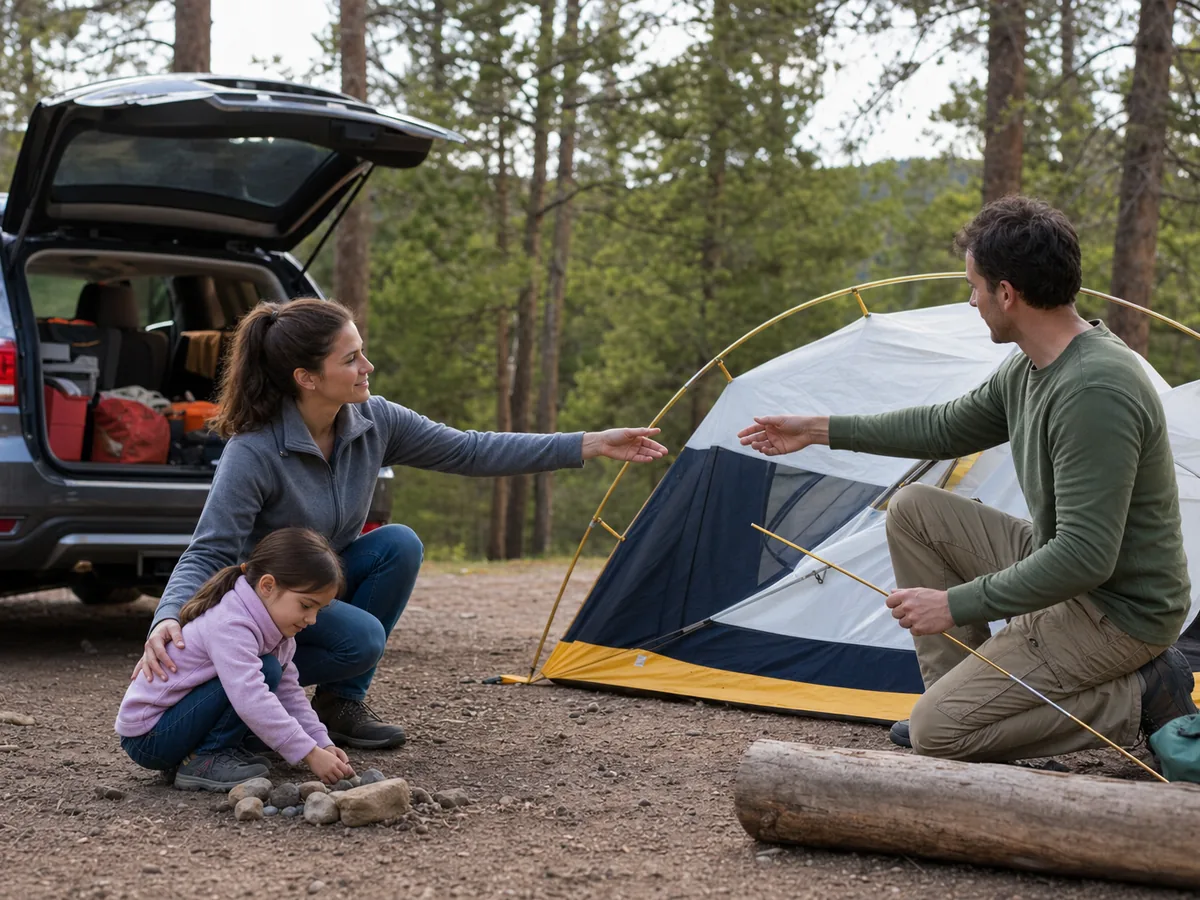
A single adult can use the same principle by reducing the work. Keep the child beside one contained task, choose ready food, and delay optional equipment until shelter and sleep are complete.
Never assume another adult is watching because several adults are nearby. A handoff is complete only when the next person answers and takes the role.
Use a spoken transfer such as, "You have Maya now," followed by a clear reply. Assuming the other adult is watching is one of the common camping mistakes with an immediate consequence near roads, water, and cooking equipment.
A single adult should cut the setup to the minimum. The one-person task test in solo camping is useful because every shelter and food step must work while the child stays beside the adult.
Supervision has one name at every moment of setup.
Give a child a camp job they can actually finish
A useful camp job has an end the child can see. "Put your shoes on this mat" is clearer than "help with camp," which can mean anything and leaves the child waiting for the next instruction.
Match the job to the child's present ability and the exact site. A child might carry a closed bag of soft clothing, place their own light beside the bed, count tent stakes beside an adult, or put clean wrappers into the closed trash container.
Show where the task happens before handing it over. Name the boundary, demonstrate the action once, and say what the child should do when finished.
The job never replaces supervision. Cooking equipment, fire, fuel, sharp tools, water edges, moving vehicles, food storage, and unfamiliar animals remain adult work even when a child wants to participate.
Prepare one waiting job for the moment an adult must repair shelter or solve a site problem. Sitting on a groundsheet to sort dry socks, choosing tomorrow's shirt, or holding a familiar book keeps the child close without pretending that a long delay is entertaining.
Pause when the child leaves the boundary or cannot finish safely. Reset the child and the task before the adult returns to unloading, because saving two minutes is not worth splitting attention near a road, fire ring, or steep bank.
Several children still need an adult. An older child may help with a simple task, but that child should not become the default person responsible for a younger child while adults cook or build shelter.
Notice completion in concrete words. "You put both lights beside the beds" tells the child what worked and makes the same job easier to repeat next time.
Keep the first jobs short enough to finish before hunger, cold, or toilet needs interrupt them. A calm finished task gives the child a place in camp without making the family schedule depend on perfect cooperation.
Offer two safe choices when either task works. Choosing between placing lights and sorting sleep clothes gives the child control without reopening the site boundary or the setup order.
Stop the task when the child becomes cold, hungry, frightened, or urgently needs the toilet. Meeting that need is more important than teaching persistence during the family's first outdoor night.
Keep one dry-weather and one sheltered task available. Rain can move the job inside the tent, but crayons, toys, and loose pieces must stay clear of cooking, wet gear, and the sleep area that adults are still building.
- Safe task
- One action with a finish the child can see
- Boundary
- One named place that stays away from traffic water fire and cooking
- Adult-only work
- Fuel flame sharp tools food storage and vehicle movement
- Finish signal
- The child reports completion and the adult checks the result
Participation stays bounded while an adult remains responsible for the whole setting.
How should food, water, medicine, and toilets fit the child's clock?
Feed the child before hunger becomes the only signal adults can see. Keep a familiar snack and drinking water reachable during the drive, check-in, and shelter setup.
Carry medication in its normal schedule and storage conditions. A water planning method then covers people, cooking, cleanup, and reliable refills rather than counting only personal bottles.
- Familiar dinner and breakfast do not depend on a campfire.
- Child water is reachable during arrival and overnight.
- Medicine and instructions remain with the responsible adult.
- Toilet paper hand cleaning and a light fit the facility plan.
- Allergies and food restrictions are reflected in every shared meal.
- One no-cook fallback can be served without opening the full kitchen.
Bathroom needs can change with age, stress, cold, and unfamiliar facilities. Explain what the toilet looks like before dark and keep an adult available for every night trip.
Do not turn food into a reward for tolerating cold, fear, or exhaustion. Fix the condition or leave rather than asking the child to earn basic comfort.
Keep medication in its required storage and under adult control, not buried in the general camp box. Bring the written schedule and enough supply for the planned stay plus a reasonable travel delay.
Know where appropriate care is available before departure.
Offer familiar food without turning each meal into a test.
A child who eats less than usual, refuses water, vomits, or becomes unusually sleepy needs observation and a smaller plan. Do not hide a worsening condition behind snacks or another activity.
Meet the need early while the correction stays small.
How does darkness change child supervision?
Give every child a simple light they can operate, but do not treat the light as permission to move around the campground alone. An adult still accompanies night movement.
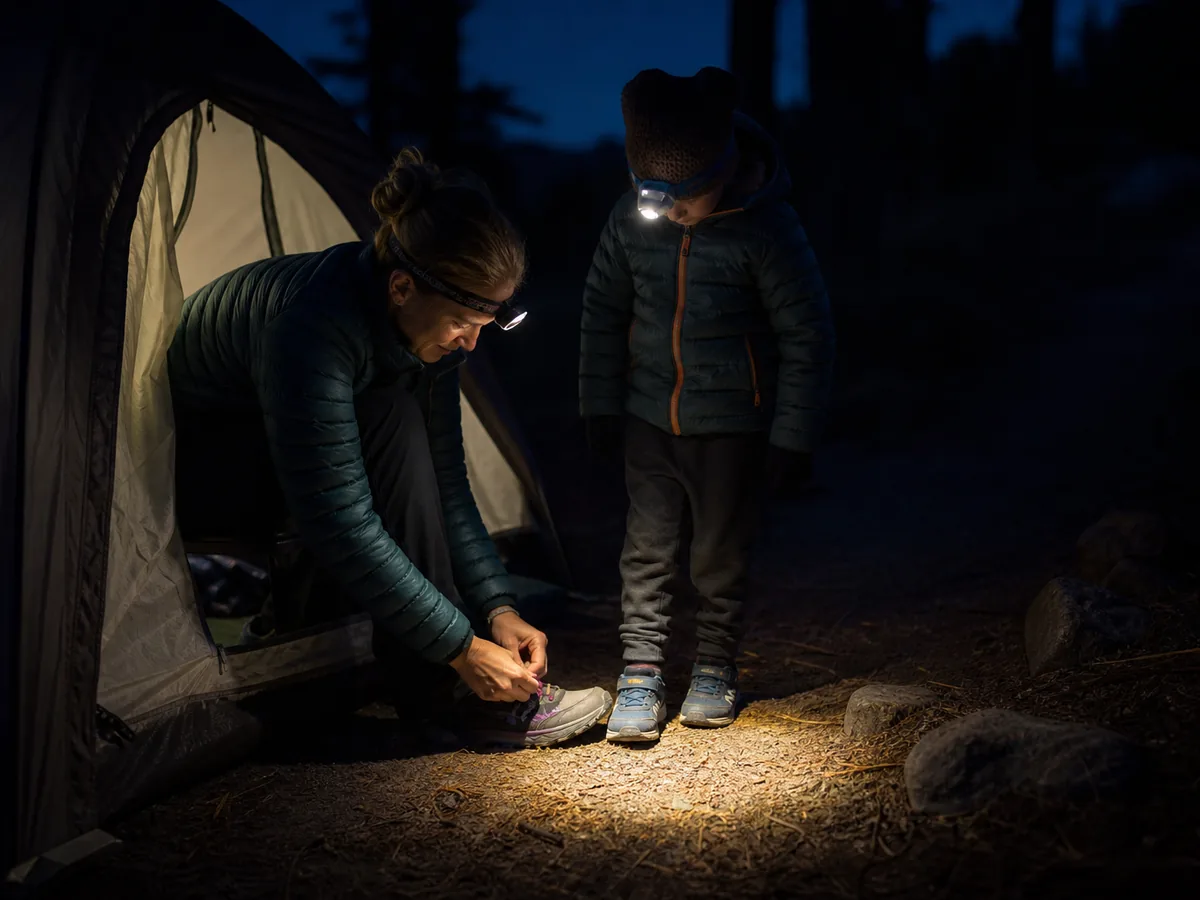
Keep the tent exit clear. When camping in rain, add fixed places for wet footwear and jackets so an urgent night movement does not cross dripping gear.
Use low, directed light inside the site. The light and boundary guidance in camping etiquette helps prevent beams and child movement from entering neighboring pads.
Give each child a simple rule for separation.
Staying in place and calling for the named adult is often easier to remember than wandering toward lights. Clothing should carry the campsite number and adult contact information without displaying unnecessary personal details.
Keep tent exits controlled without making emergency escape difficult. Adults should know who sleeps nearest the door, where shoes and lights sit, and how everyone leaves if fire, severe weather, or another urgent problem requires movement.
Prepare the night route in daylight so nobody invents it while half awake.
When should family camp activities stop?
Optional play begins after shelter, beds, food storage, water, lights, and the toilet route are ready. If the family also brings a pet, complete the restraint plan for camping with a dog before play splits adult attention.
Pros
- Short activity inside the site boundary after required work
- Walk with a clear return time before dinner and bedtime
- One familiar game that packs quickly
Cons
- Long drive plus a late hike before shelter setup
- Water play that consumes the dry sleep clothing
- Activity that leaves adults cooking and supervising in darkness
Choose a cutoff based on sunset and bedtime. If arrival is late, remove the activity rather than compressing dinner, sleep, and supervision.
Build a stopping cue into each activity. "One more turn, then water and dinner" gives the child a visible end.
Waiting for exhaustion often creates a conflict at the same moment that adults need cooperation for food and bedtime.
Choose activities that can be abandoned without waste or risk. For a short walk, use the pace and adult positions from hiking with kids and turn back before food, toilet, or bedtime becomes urgent.
Fun fits after function. The trip remains enjoyable when basic needs are already protected.
What should you check before adding a second day?
Look at the child before announcing the next activity. Sleep, warmth, appetite, pain, toileting, mood, and willingness to move give better evidence than the original schedule.
- Ask whether the child slept and feels warm enough.
- Check for pain wet clothing bites or a problem with footwear.
- Offer normal food and water before judging energy.
- Confirm medicine and toilet needs are settled.
- Shorten the plan when attention or recovery is below normal.
- Leave when the child is ill cannot warm up or cannot travel comfortably.
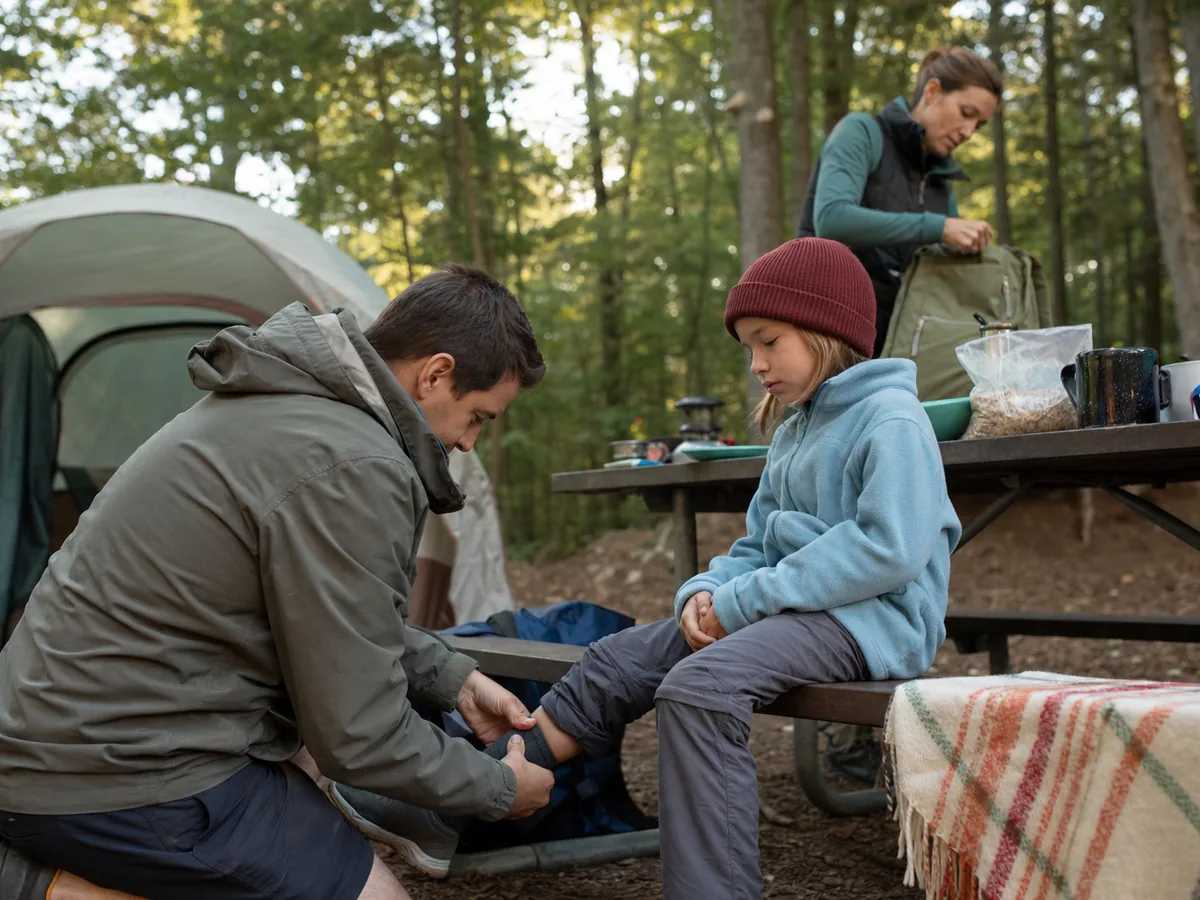
Pack required items while the child is still warm and fed. One adult supervises while the other closes shelter, food, waste, and the empty-site sweep.
A second night is optional. Leaving after one workable night gives the family a clean result to improve rather than turning tiredness into the main memory.
Ask the child specific questions that fit their age. Where do your feet hurt?
Are you warm now?
Can you eat this breakfast? Do you want to use the toilet before we pack?
Concrete answers are more useful than asking whether camping was good.
Adults should examine their own condition too.
A poor night can make driving, supervising, cooking, and packing less reliable. Shorten the morning, use the simplest food, and rest in a safe legal place before driving when needed.
Recovery sets the next step. The child does not owe the plan another day.
Sources
The National Park Service recommends matching the trip to skills, conditions, duration, reservations, equipment, emergency communication, and a backup: Before the Trip.
Its campsite guidance covers facilities, overhead and drainage hazards, tent placement, food separation, and daylight setup: Finding and Setting Up a Campsite.
The National Park Service also addresses food, wildlife, fire, weather, and water safety during a stay: Camping Safely.
Verify the exact campground because toilet access, water, pets, fires, gates, and quiet hours vary by place and date.
Step by stepPractical steps
- Choose one developed site around toilet, water, vehicle, boundary, and quiet needs.
- Rehearse the exact tent, bed, clothing, lights, and bedtime sequence at home.
- Assign one supervising adult before unloading and use spoken handoffs.
- Prepare food, water, medication, toilet supplies, and night movement before they become urgent.
- Stop optional activities before they consume setup light or bedtime.
- Use the child's morning condition to continue, shorten, or leave.
AnswersQuestions readers ask
What age is best to start camping with kids?
There is no single best age. Start when adults can meet the child's feeding, sleep, temperature, medication, toilet, supervision, and transport needs at a legal developed site with an easy exit.
How long should a first camping trip with kids be?
One night gives the family enough time to test arrival, dinner, toilets, sleep, breakfast, and packing without repeating weak routines for several days.
How do you help a child sleep in a tent?
Rehearse the exact tent and bed at home, protect a familiar bedtime, keep one dry sleep layer, place the adult, light, footwear, and exit predictably, and explain ordinary campground sounds before dark.
What should kids do while adults set up camp?
One named adult should supervise inside a clear safe boundary while the other handles shelter and sleep. A single adult should reduce setup, use ready food, and keep the child beside one contained task.
When should a family leave the campsite early?
Leave when a child is ill, cannot warm up, has pain that changes movement, cannot use required facilities, becomes unsafe to supervise, or when weather, access, shelter, food, water, or medication no longer works.