
Is Camping Good Exercise? Count the Movement, Not the Nights
Camping can add useful walking, carrying, and setup work, but a quiet drive-up stay is not automatically an aerobic or strength workout.
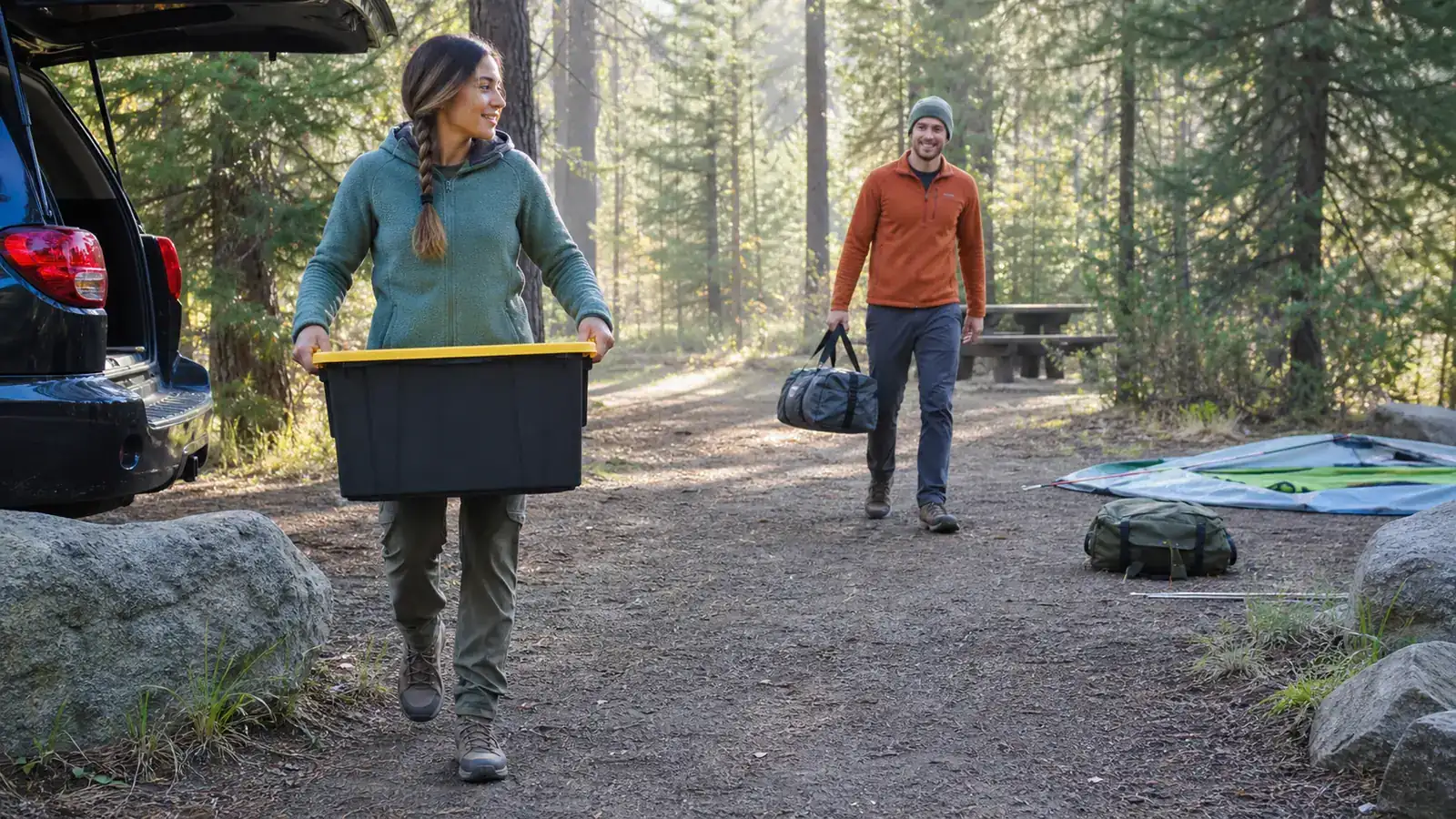
Camping can be good exercise when the trip includes sustained walking, repeated carries, active setup, paddling, cycling, or another activity that raises your breathing effort. Driving to a site, sitting by a fire, and sleeping outdoors do not count as exercise simply because they happen at camp.
Count the minutes that make your body work, not the number of nights on the reservation.
KnowOutdoor field rule
Camping trips are an activity setting, not one fixed workout. A walk-in site can require several loaded trips.
A drive-up site may require only a short unload.
One group may hike, swim, or paddle for hours, while another group reads beside the tent.
That difference explains why the answer is conditional.
Camping gives you opportunities to move. The actual exercise comes from what you do, how long you do it, and how hard your body works.
When does camping count as real exercise?
A full camping weekend may contain many inactive hours. The drive, meals, chair time, and sleep can easily exceed the time spent carrying gear or walking.
Those quiet hours can be restorative, but they do not turn into exercise because the location is outdoors.
Start with an honest movement record.
Count purposeful walking, repeated loads, active games, paddling, cycling, and continuous setup work. A first-trip plan can reserve time for those activities.
Leave out time spent standing near a task, driving, or resting between a few isolated lifts.
Short bursts still add movement to the day. They may improve how often you get up and use your joints.
Yet a few one-minute carries do not provide the same aerobic demand as a continuous brisk walk.
Active minutes decide whether the trip added a meaningful workout.
Only some camp activities reach an aerobic effort
Frontcountry camping often creates movement between the vehicle, tent pad, water source, toilet, and activity area. A walk-in site increases that distance.
Several controlled carries can keep the heart and lungs working, especially on a slope or uneven approved path.
Continuity matters.
Ten minutes of steady walking has a different effect from ten one-minute tasks spread across an afternoon. Both are movement, but the steady effort is easier to classify as aerobic work because breathing stays elevated.
Use the talk test instead of guessing from sweat.
During moderate effort, most adults can talk but not sing. If you can sing comfortably, the work is probably light.
If you can say only a few words before pausing, the effort may be vigorous.
| Camp activity | Likely effort | What changes the demand |
|---|---|---|
| Unloading beside the pad | Light and brief | Load size, safe lifting, and number of trips |
| Carrying gear to a walk-in site | Light to moderate | Distance, slope, surface, load, and rest |
| Brisk campground walk | Moderate for many adults | Pace, hills, duration, and personal fitness |
| Paddling or cycling | Light to vigorous | Speed, wind, water, grade, and duration |
| Setting up a large camp | Intermittent | Repeated carries, squats, reaching, and pauses |
| Sitting, driving, and sleeping | Inactive or very light | These hours do not become exercise at camp |
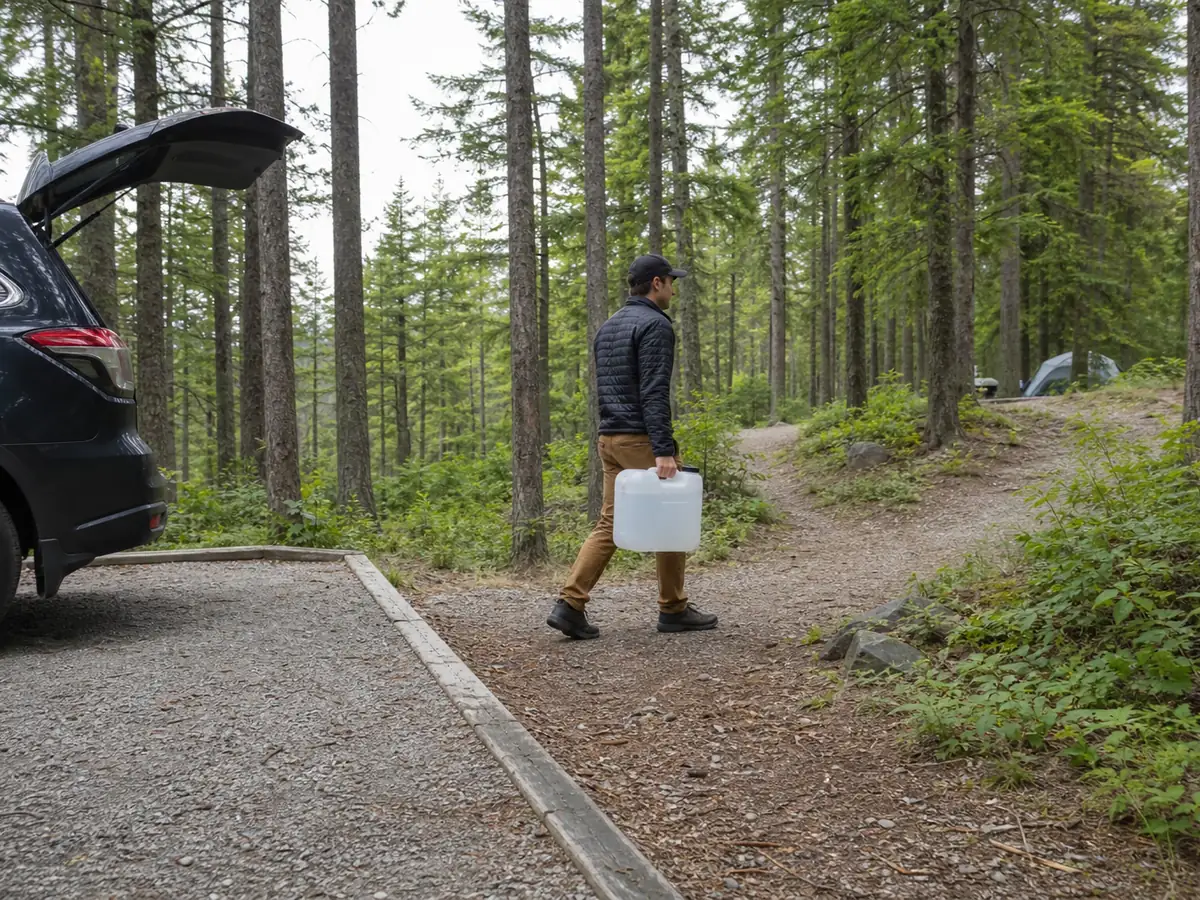
Do not chase intensity while holding bulky camping equipment.
A fast carry can block your view, strain your grip, and make a fall more likely. Use smaller stable loads and gain exercise from distance or a separate walk.
Terrain changes the same task.
A level paved carry may remain light. A longer approved path with a grade, soft surface, or repeated steps can raise breathing quickly.
Heat, humidity, altitude, and fatigue can raise the personal effort even when the distance and load stay the same.
Rest periods belong in the record.
If a five-minute carry requires a long recovery, count five active minutes rather than the whole interval. The recovery still tells you that the load, pace, or conditions may be too demanding for repeated safe work.
Sustained safe movement provides most of the aerobic value.
The aerobic benefits and limits come from this pattern.
Sustained moderate movement can contribute to weekly activity, improve walking tolerance, and make repeated campsite trips feel easier. It cannot be credited when effort stays too brief, rests dominate the interval, or the task stops because the load is awkward rather than because the heart and lungs received steady work.
Progress needs another trip or another session with a controlled increase. A slightly longer walk, another moderate interval, or a modest hill gives the body a clear new demand.
Randomly carrying a heavier cooler does not provide measurable progression and raises the consequence of a dropped load.
Does setting up camp count as strength work?
Moving a cooler, water container, tent bag, and food bin uses the legs, hips, trunk, arms, and grip.
Repeated squats to stake a tent or organize a low storage box also require useful control. These are real physical tasks.
The workload is uneven, though. One awkward tote may be heavy without producing good strength training.
A lift with a twisted spine, poor handhold, or blocked view increases risk without adding a special benefit.
Loaded carry
Trains grip, trunk control, and walking under load when the item is stable and the path is clear.
Tent setup
Uses kneeling, squatting, reaching, and light pulling across several directions.
Water handling
Adds repeated carries, but sloshing containers can create unstable loads.
Missing work
Camp chores rarely train every major muscle group through a planned range and progression.
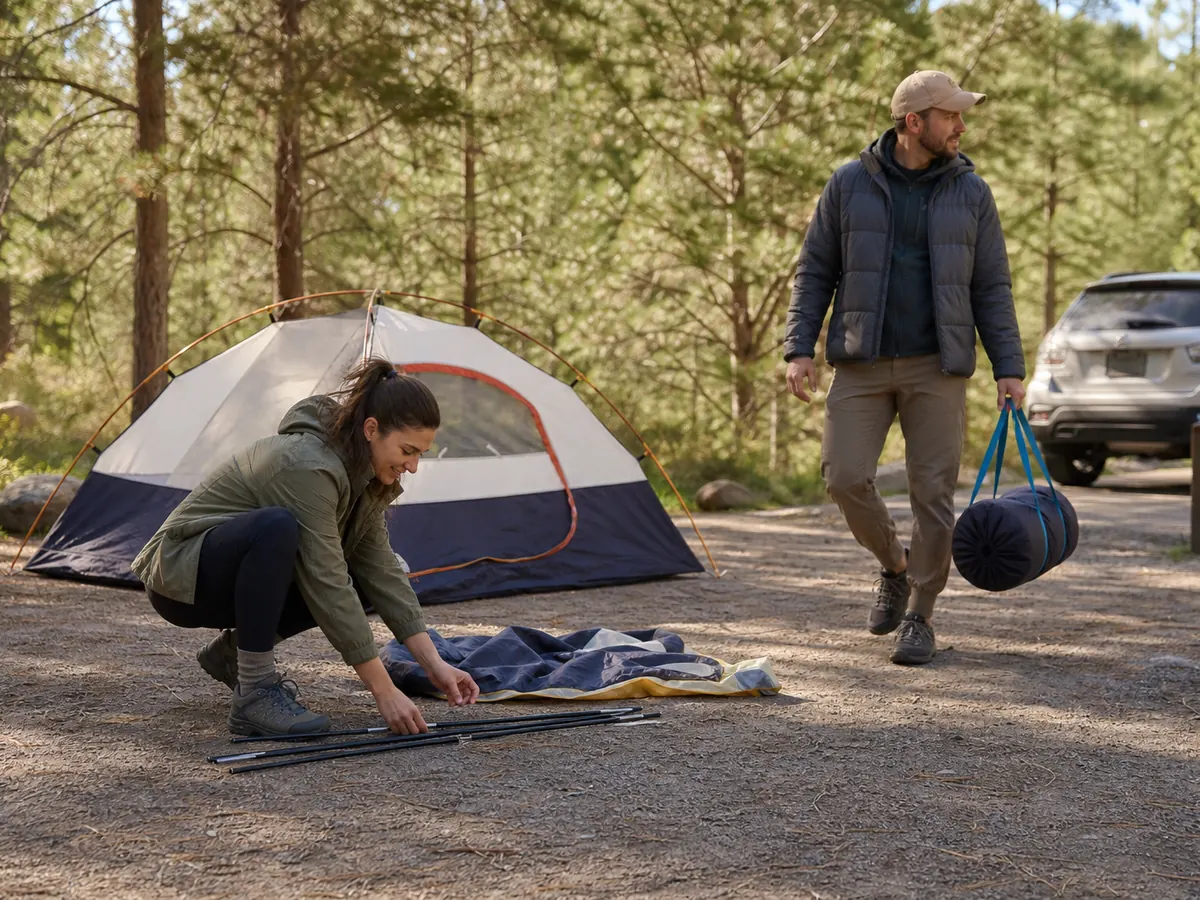
Structured strength work controls resistance, technique, repetition, and recovery.
Camp setup controls none of those very well. Treat it as task strength and general activity, not proof that the week included complete strength training.
Ask for help with a load that changes your posture or blocks the route. Two controlled carries are better than one strained attempt.
Wheels or a cart can also be the right choice where rules and surfaces allow them.
Plan the unload so the body does not repeat the worst lift. Put dense bins where they can slide toward the vehicle edge before lifting.
Clear the landing area first.
Face the direction of travel instead of twisting with a cooler or water container in both hands. This avoids one of the common camp mistakes, which is creating work before the site has a clear layout.
Alternating tasks also matters. One person who carries every dense item, drives for hours, and then performs all shelter work starts the trip with concentrated fatigue.
Divide suitable loads and allow recovery before adding a separate activity.
Useful strength is controlled. Awkward weight is only awkward weight.
The strength benefits and limits are equally specific. Repeated safe carries can build confidence with grip, bracing, steps, and getting objects from vehicle height to the ground.
Camp chores do not provide balanced pushing, pulling, leg, trunk, and upper-body work through a repeatable range.
Fatigue also changes the movement quality quickly.
Stop using a load as exercise when shoulders rise, the back twists, feet shuffle, or the object begins to swing. Set it down on a stable surface, split the contents, or ask another adult to share it.
How can the talk test measure effort at camp?
Fitness trackers can estimate movement, but they are not required. Notice breathing, speech, technique, and recovery.
These signs tell you more about the current task than the activity label does.
Light effort lets you talk and sing.
Moderate effort usually allows conversation but not singing. Vigorous effort makes more than a few words difficult.
Personal fitness, heat, altitude, illness, and load can change those responses.
Camping safety should never be overruled by exercise intensity.
Carrying faster near children, vehicles, fires, tent lines, or uneven ground creates avoidable risk. Choose a clear route and let the task take longer.
Breathing and control matter more than a device estimate.
How can you build an active camping day?
Add movement by choosing an activity the group already wants to do. A marked walking route, accessible nature path, swim area, paddle, or bike route produces clearer exercise than inventing extra labor with camp equipment.
Check current access, weather, hours, distance, and group ability before committing. The simpler scope used in camping for beginners helps protect the first active trip.
A route that starts beside camp can still be unsuitable because of heat, steep ground, water conditions, darkness, or a difficult return.
Choose a duration that leaves energy for cooking, hygiene, supervision, and a safe return.
The activity ends at the campsite only when everyone can still complete those required tasks. A walk that empties the group before dinner can turn ordinary stove, fire, child, or pet work into poor decisions.
- Name the activityPick one walk, paddle, ride, swim, or active game that fits the location and group.
- Set the usable windowPlace it before heat, storms, darkness, meals, or checkout create pressure.
- Keep camp loads practicalUse safe carries for setup and save deliberate effort for the activity.
- Use the talk testAdjust pace so the intended effort remains controlled.
- Record real movementNote approximate active minutes rather than counting the whole trip.
- Protect recoveryEat, drink, cool down, and sleep without adding unnecessary late chores.
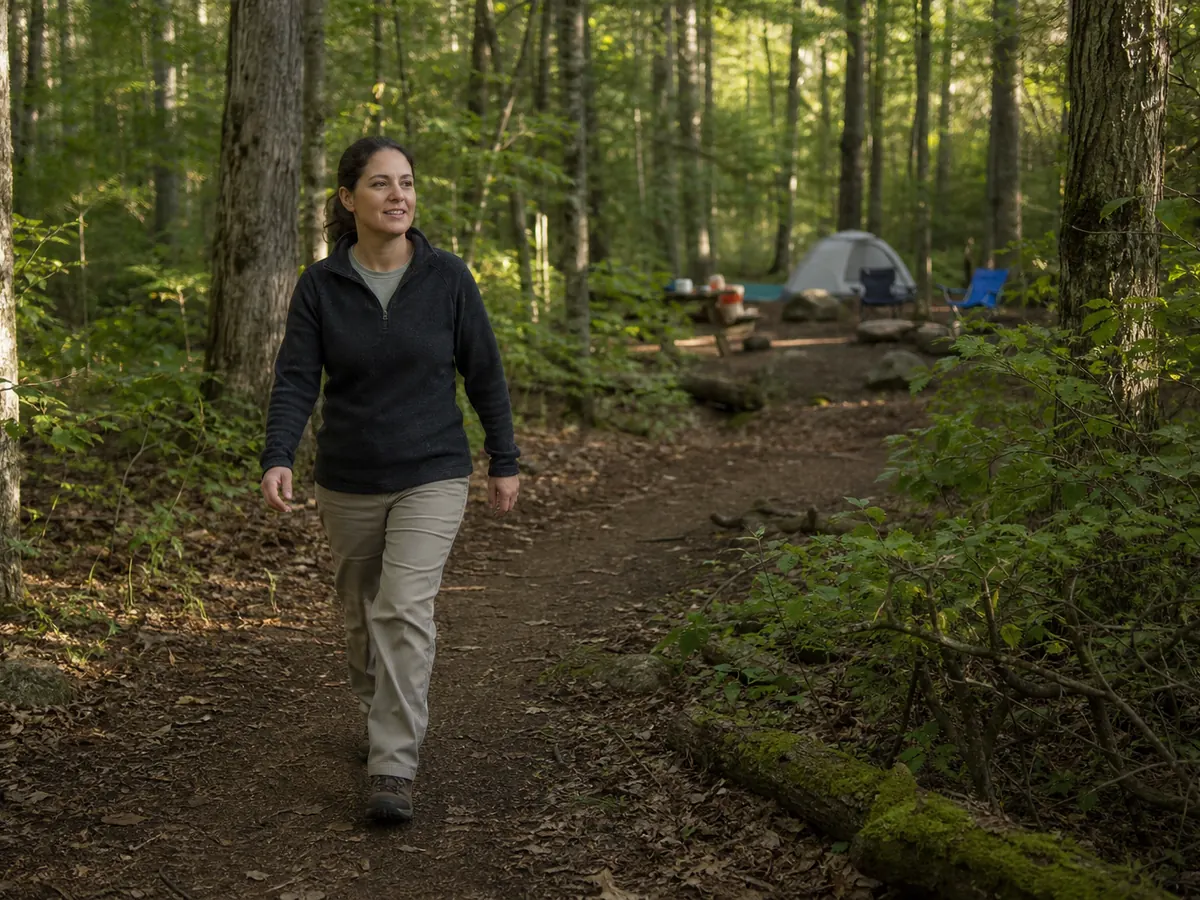
A quiet trip can stay quiet. Rest may be the purpose.
The honest choice is to call it recovery and schedule exercise elsewhere rather than forcing a workout into every reservation.
Increase one variable at a time on later trips.
Add a longer walk before adding a heavier load. Add an active morning before filling both days.
This shows which change created fatigue and keeps the return, meal, and sleep plan workable.
For a more active trip, walk to a legal destination instead of circling through occupied sites. Follow camping etiquette so noise, lights, and group movement stay within campground rules.
Exercise should not become another camper's disruption.
Plan one real activity instead of manufacturing busywork.
Most camping trips are mostly sitting
A solo camping weekend may include six hours of driving, sixteen hours of sleep, several long meals, and most of a day in a chair. One thirty-minute setup can be useful movement without making the entire weekend active.
This distinction helps when you compare the trip with a normal week.
Quiet hours still count as quiet even when they happen outdoors.
How do you count an active camping day?
Keep a simple movement log if you want to count camping toward weekly activity. Record the start and finish of purposeful walks, active water trips, repeated gear carries, paddling, cycling, or another continuous activity.
Do not count the whole time between leaving the tent and returning. Subtract standing conversations, long photo stops, meals, driving, and chair time so the entry reflects movement rather than time outdoors.
Write the effort beside each entry. Use easy, moderate, or vigorous based on breathing and the talk test, then note whether the work stayed continuous or arrived as short tasks separated by rest.
A quiet campground day might contain two five-minute water walks, ten minutes of setup, and an easy twenty-minute stroll. That is useful movement, but it does not become an all-day workout because the group stayed outside for twelve hours.
An active day can look different without adding risky chores. A thirty-minute brisk route before breakfast, a forty-five-minute paddle under suitable conditions, and several controlled carries may provide substantial movement across the day.
Keep the entries separate instead of converting them into a calorie estimate. Body size, speed, grade, load, temperature, technique, and the measuring device can change that estimate, while minutes and effort remain easier to compare with the next trip.
The log also shows what the day missed. Continuous walking or paddling may cover aerobic work but little pulling strength, pushing strength, or controlled resistance through a full range of motion.
Do not manufacture missing exercise by carrying an overloaded cooler farther, lifting water for repetitions, or turning setup into a race. Awkward objects, tent lines, uneven ground, heat, and other campers make camp chores a poor substitute for controlled training.
Choose a safe activity instead. Add a suitable marked walk, split water into manageable loads, or keep the normal fitness session on another day rather than forcing camp equipment to perform a gym job.
Compare the log with the rest of the week after returning home. If the trip replaced a usual active day, the recorded minutes show whether it filled the same role or whether the next few days still need normal movement.
Minutes show what the trip contained without pretending every task had the same effort.
Recovery tells you what to change next trip
Also record how normal movement feels the next morning. Mild tiredness after an unfamiliar active day is different from sharp pain, swelling, a changed gait, dizziness, or exhaustion that interferes with routine camp tasks.
Use that recovery note when planning the next trip. If a loaded carry caused pain or poor technique, reduce the load or number of trips instead of treating soreness as proof of a better workout.
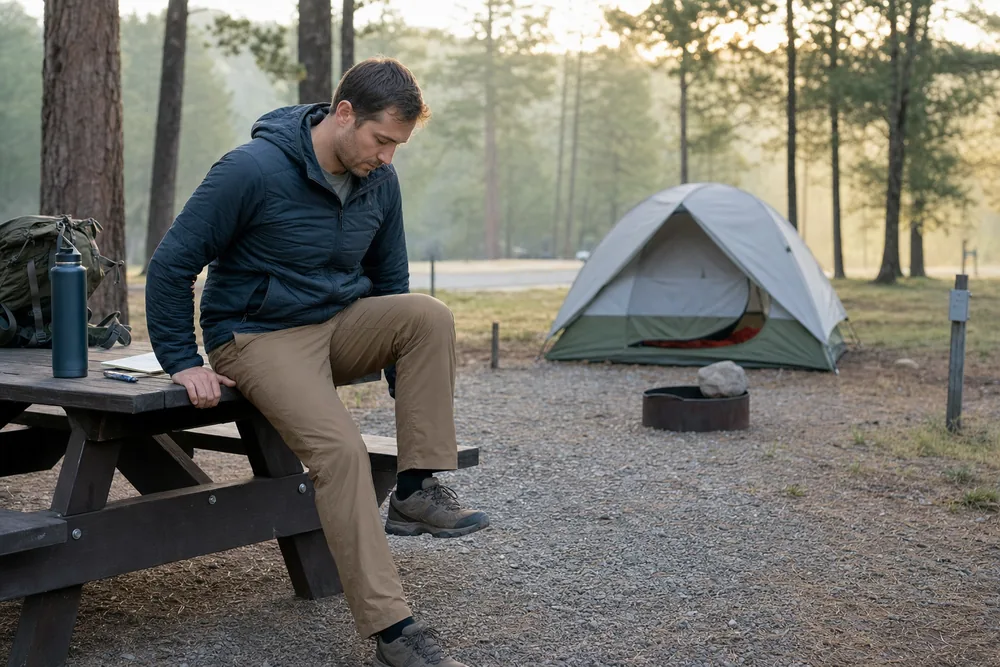
A repeatable activity is more useful than one oversized effort. The log should help you choose a suitable walk, carry plan, or paddle next time without turning a campsite into an improvised training course.
Count the minutes that actually moved you. A restorative camping trip can remain restorative, while an active trip earns its place through visible walking, carrying, paddling, cycling, or other sustained work.
The Centers for Disease Control and Prevention says adults generally need at least 150 minutes of moderate-intensity aerobic activity each week plus muscle-strengthening activity on two days. A camping weekend may contribute to that target, meet a large part of it, or contribute almost none.
- Counted only periods with purposeful movement.
- Separated light chores from sustained moderate effort.
- Did not count driving, sitting, or sleep as exercise.
- Identified whether camp tasks challenged strength safely.
- Compared the trip with the rest of the week's activity.
- Left room for recovery when rest was the actual goal.
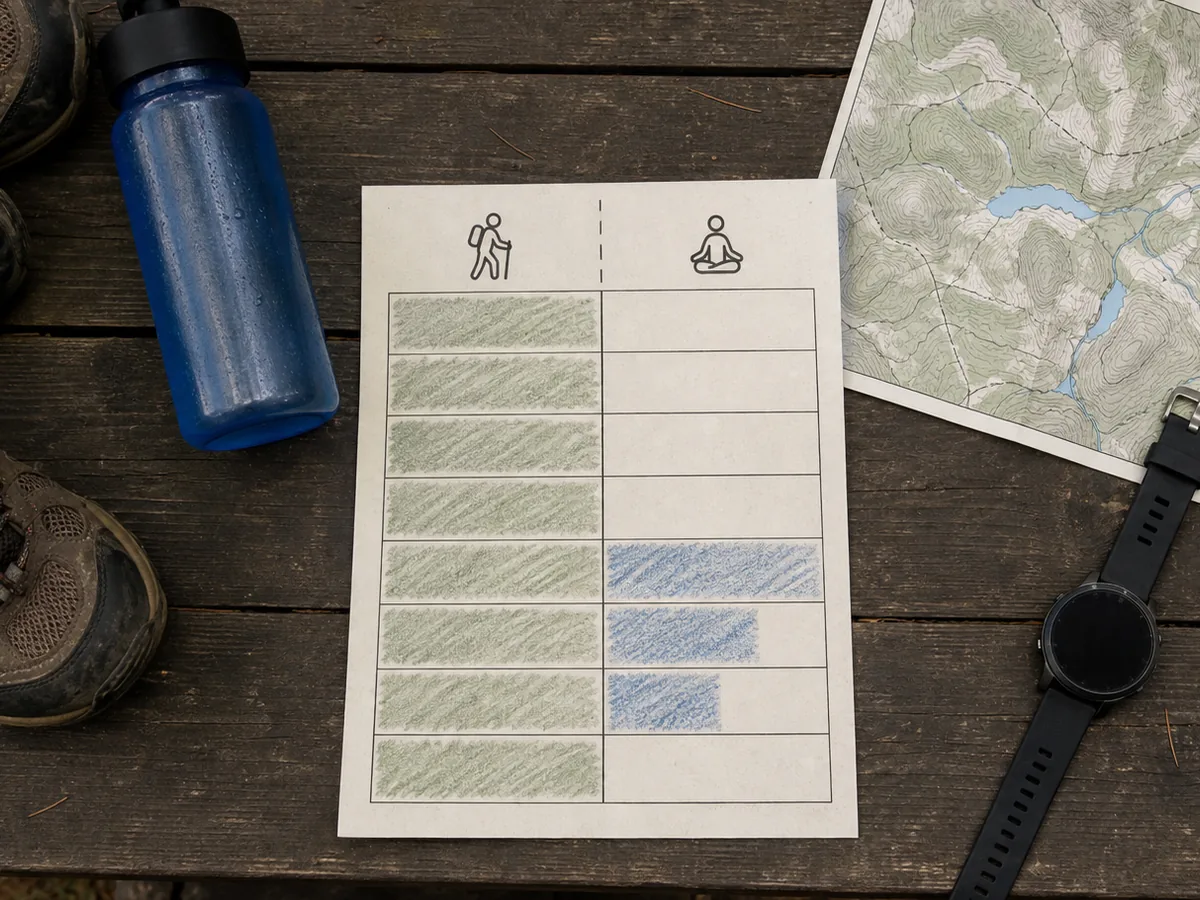
People with health conditions, recent injuries, pregnancy, disability, or a long break from activity may need a different pace or activity choice. A health professional can help set an appropriate level when there is uncertainty.
Children do not need an adult exercise target applied to their camp day.
The routines for camping with kids prioritize safe age-appropriate movement, supervision, food, water, sun protection, and rest. Their behavior and coordination are more useful guides than an adult tracker total.
The whole weekend is not the workout. Only the active portions can contribute.
Can camping replace a complete fitness plan?
After the trip, classify it from evidence.
A weekend with brisk walks, repeated controlled carries, and a long paddle may be an active part of the week. A weekend built around driving, reading, and rest may be valuable recovery with little exercise.
Fill the missing pieces on other days.
If camp provided steady walking but little strength work, keep normal strength sessions. Hiking exercise can add sustained climbs and descents, while backpacking exercise adds a continuous carried load.
If setup involved lifting but no sustained movement, add aerobic work when recovered.
Camping supports fitness when the schedule contains actual movement. It does not replace a balanced plan by default.
Sources
The Centers for Disease Control and Prevention explains weekly aerobic and muscle-strengthening guidance: Adult Activity: An Overview.
The CDC describes the talk test for moderate and vigorous physical activity: Measuring Physical Activity Intensity.
The National Park Service explains how group ability, site access, setting, season, and duration affect camping plans: Camping Safely Before the Trip.
Step by stepPractical steps
- Choose one campsite activity that creates sustained movement.
- Match the route, duration, and effort to the group's ability.
- Carry camp equipment in stable loads along a clear path.
- Use the talk test to judge current intensity.
- Count active minutes instead of total trip time.
- Fill aerobic or strength gaps on another day.
AnswersQuestions readers ask
Does setting up a tent count as exercise?
It counts as physical activity and may include useful carries, squats, kneeling, and reaching. The effort is usually brief and uneven, so it should not automatically replace a full aerobic or strength session.
Does car camping burn many calories?
The amount varies too much to estimate from the trip label. Count the time and intensity of walking, carrying, paddling, cycling, or other movement instead of assuming every hour outdoors is active.
Can camping replace a workout?
An active camping day can replace a similar planned session when the duration and intensity are comparable. A mostly seated drive-up trip usually cannot replace both weekly aerobic and strength work.
How can I make camping more active?
Plan one suitable walk, paddle, ride, swim, or active game. Check conditions and group ability, then keep camp chores practical rather than adding unsafe carries for exercise.
Is camping good exercise for beginners?
It can be a gentle way to move more when access, loads, distance, and activities match the person's current ability. Begin with short controlled activity and stop when technique, balance, breathing, or symptoms become concerning.