
Adjusting Daily Mileage While a Long Trek Is Underway
Treat the itinerary as a set of safe options, then use what actually happens on the trail to choose each day.
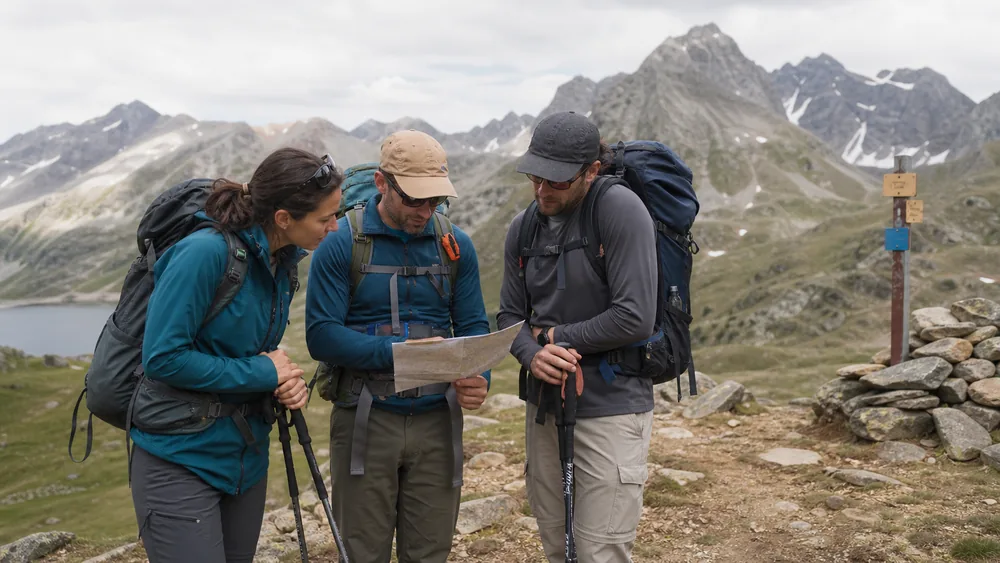
To adjust daily mileage on a long trek, compare elapsed pace with the time left to a safe camp or exit. Shorten the day when feet, weather, altitude, or group pace consume the margin. Add distance only when the next stopping place is confirmed and every trekker is still moving normally.
Backpackers should expect to travel no more than 2 miles per hour.
National Park Service, Grand Teton
That figure is a conservative planning reference for Grand Teton, not a universal trekking speed. A steep pass, loose descent, river crossing, altitude, or long water stop can make the same map distance take far longer.
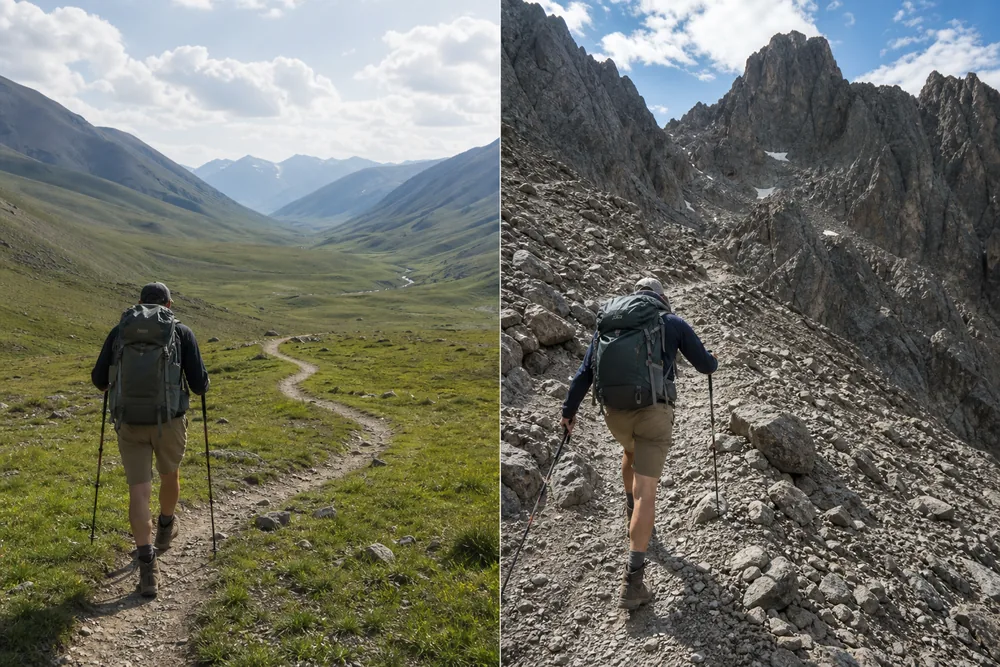
At noon, a group may be exactly halfway through the mapped distance and still be behind the safe schedule. The first half followed a valley. The second climbs to a pass, crosses exposed ground, and ends with water collection before camp, so the clock matters more than the line on the map.
Plan with elapsed time. The useful question is whether your group can reach a suitable stopping place with daylight, energy, and an exit margin still available.
Build a range instead of one daily number
Give each stage a minimum useful distance, a preferred camp, and a maximum safe extension. Mark every legal or suitable stopping place between them before departure.
Distance alone cannot define the range. Record climb, descent, surface, exposed sections, water collection, navigation difficulty, and any permit boundary.
A first trekking itinerary should keep these alternatives visible on the route notes. Do not bury them in a phone that one person carries.
Use your high-altitude pace estimate as a starting value when elevation is part of the route. Reduce it for terrain you have not trained on and for the first days under full pack weight.
Name the alternatives. A flexible itinerary is useful only when each shorter and longer stop is real.
Measure elapsed pace, not only walking speed
Elapsed pace includes breaks, water treatment, clothing changes, navigation, photographs, foot care, and waiting for the group to regroup. It predicts arrival better than the speed shown while you are moving.
- Choose a known checkpointUse a junction, bridge, pass, water source, or measured distance.
- Record departure and arrivalInclude every stop between the two points.
- Note the conditionsWrite down climb, descent, surface, heat, altitude, and pack condition.
- Calculate the full rateDivide distance by total elapsed time.
- Project to the next stopAdd water, food, navigation, and camp setup time.
- Compare with the daylight limitKeep the planned reserve untouched.
If 6 miles take four hours from camp to checkpoint, use 1.5 miles per hour for the next comparable section. Do not use a watch value of 2.5 miles per hour that excluded ninety-six minutes of stops.
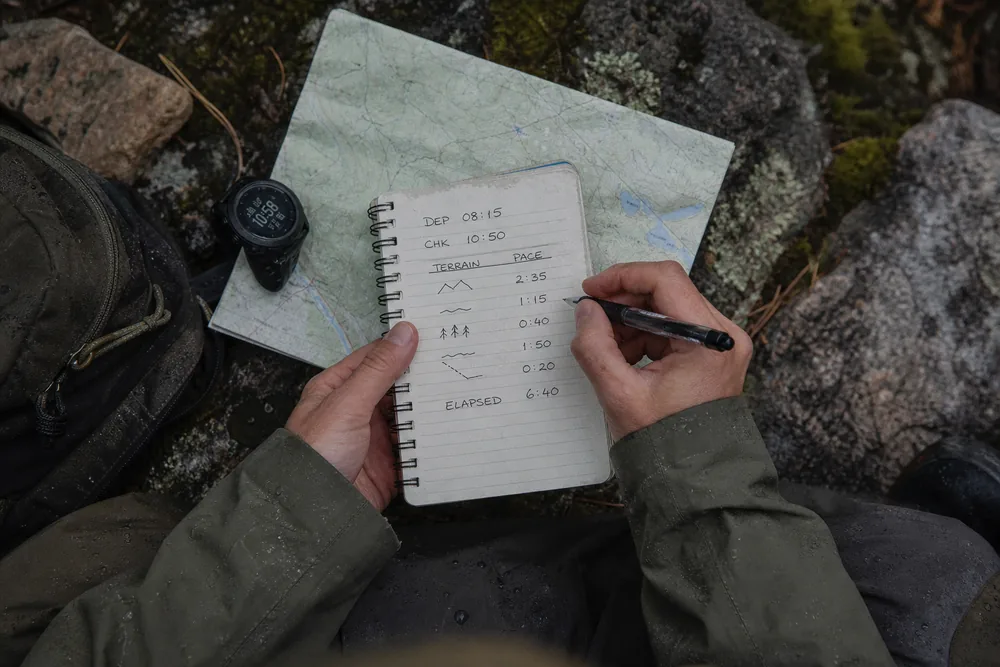
Use map distance and elevation together. Two miles across contour lines demand a different estimate from two miles along a broad valley. Confirm uncertain direction with a compass bearing.
Count all minutes. The clock determines exposure and arrival, even when the group is resting.
Read the first two days as field data
The first two days show whether pack weight, sleep, food, feet, and group rhythm match the plan. Review both days before trying to recover any missed distance.
| Observation | Likely meaning | Next adjustment |
|---|---|---|
| Normal gait and stable elapsed pace | Plan is realistic | Keep the preferred stage |
| Pace drops late each day | Recovery or fueling is inadequate | Shorten before fatigue accumulates |
| Hot spots or repeated foot stops | Skin load is rising | Choose the nearer camp |
| Morning pulse or breathing feels abnormal | Illness or poor acclimatization may be developing | Hold, descend, or seek care as symptoms require |
| One member repeatedly arrives much later | Group estimate is wrong | Rebuild stages around the group |
An early short day is information, not failure. The body often needs time to adapt to consecutive walking and the loaded pack.
Review foot condition between trekking days before changing the distance. Sore feet can create a slower and less stable gait long before the person calls the problem an injury.
Use the trend. One slow hour may be terrain, but two declining days require a new plan.
Change distance when terrain or altitude changes
A long climb adds time during the ascent and may reduce speed after the pass. A loose descent can be slower than the climb because every step needs braking and placement.
At altitude, reduce the stage when breathing, sleep, appetite, coordination, or headache worsens. Distance must never take priority over a safe acclimatization schedule.
Heat may require an earlier start and a long midday pause. Rain can slow rock, roots, crossings, and camp setup. Strong wind can turn an easy ridge into a balance and cold problem.
When conditions change, estimate the remaining section again. Do not apply the morning average to a new surface merely because it is the only number available.
Reset at the boundary. A pass, storm, snow line, or altitude gain starts a new estimate.
Use a midday decision point
Choose the decision point before leaving camp. It should occur before the route commits to a pass, dry section, exposed ridge, or long distance between stopping places.
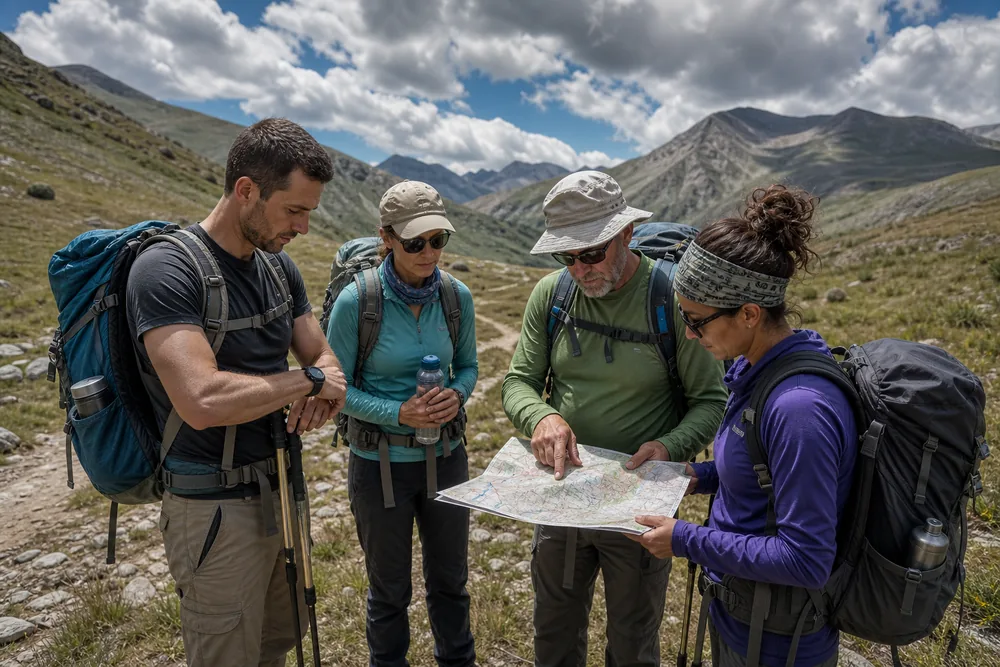
At that point, compare actual arrival time, remaining daylight, water, food, foot condition, weather, and the slowest person's gait with the written thresholds.
Take the nearer camp
Arrival is behind plan, feet are deteriorating, or weather is closing.
Keep the preferred camp
Pace is stable and the original reserve remains intact.
Extend to the later camp
Conditions are better than planned and the extension remains reversible.
Wait or turn back
A hazard cannot be evaluated safely from the current information.
Set a turnaround time for optional side trips. A summit or viewpoint does not justify arriving at the main camp without light or water.
Decide while options exist. Waiting until exhaustion removes the flexibility you planned.
Protect the slowest healthy pace in the group
The group's usable pace is the rate at which everyone can walk steadily, eat, drink, and keep normal movement. It is not the speed of the strongest person at the front.
Keep the group close enough to communicate at junctions and hazards. Use short, predictable breaks instead of making slower people catch up to walkers who immediately leave again.
Move shared equipment or some weight when one person's pack is causing strain. A trekking pack check can prevent the same imbalance on the following day.
Do not use shame, fixed bookings, or past performance to force pace. Reported dizziness, unusual breathlessness, confusion, chest pain, loss of coordination, or a changed gait requires assessment, not encouragement to go faster.
Keep the group functional. A pace that breaks one member is not an efficient pace.
Handle fixed camps, transport, and resupply
Bookings and permits reduce flexibility, so contact the operator or land manager before departure and learn the procedure for a late or missed arrival. Record phone numbers, check-in windows, and alternative access.
- Confirm which camps are legal and whether moving a reservation is possible
- Carry enough food for a delay allowed by the route risk
- Know the last transport time and the cost of missing it
- Mark exits before and after the fixed point
- Tell the contact person how a changed itinerary will be reported
- Keep emergency food separate from normal daily snacks
A resupply deadline may justify shortening an earlier day so the group begins the critical stage rested. It does not justify crossing exposed ground in unsafe weather.
For booked lodging, adapt hut-to-hut stage checks to opening times and alternate shelter. If the day also crosses a pass, use stricter mountain-pass turnaround rules because reaching the high point still leaves the descent.
Rain changes both parts of that calculation. Use the slower wet-trail routine before projecting the next checkpoint, then ask whether the same delay has appeared for a second day. Two shortened stages may mean the group needs the planned rest-day decision instead of another attempt to recover distance.
The group's trekking safety limits still govern every mileage change, even when a booking or transport connection is expensive. Once the stop changes, use the agreed solo check-in plan to report it. That keeps a routine delay from being mistaken for an emergency and prevents a real overdue check-in from being ignored.
Protect the safety decision. Logistics must adapt to people and conditions, not reverse that order.
Know when adding miles is reasonable
Extend only when the later stop is confirmed, the path is known, water is adequate, the weather is stable, and every person agrees without pressure.
Pros
- Add distance when arrival remains well before the daylight limit.
- Keep the extension reversible until a named checkpoint.
- Preserve tomorrow's food, water, and recovery plan.
Cons
- Do not extend because the morning felt easy on different terrain.
- Do not skip a meal, foot check, or water treatment to gain time.
- Do not count emergency headlamp time as planned walking time.
Lost miles are not owed to the itinerary. If shortening one day makes the original finish impossible, use an exit, transport change, or rest plan rather than stacking the deficit onto tired legs.
Finish with capacity left. Tomorrow's stage begins with the condition you carry into camp tonight.
Before leaving the decision point, write the revised stop, expected arrival, and next check-in time on every route note and device. Keep the original route information beside the change. If an exit closes or a water source fails, you may need those earlier alternatives again.
Then calculate the effects beyond tonight. A shorter afternoon can still create a difficult morning when it ends below a dry ridge, farther from the next supply, or at the foot of a steeper climb. Compare the new plan with the group's food and fuel before the nearer resupply or exit disappears.
A one-day buffer can absorb a storm, transport delay, minor illness, or equipment repair where permits and the route allow it. Do not spend that buffer simply because the group feels strong.
Record why the mileage changed. “Rain made the boulder field one hour slower” is useful on the next stage. “We had a bad day” cannot improve the next estimate.
When two options remain close, prefer the one that creates more daylight, water, shelter, and communication margin. Extra distance is valuable only when it improves the whole route.
At camp, compare actual arrival with the projection. An error greater than thirty minutes means the next estimate needs a different pace, terrain allowance, or stop allowance. Tell the home contact when the finish date or check-in window changes so an expected adjustment is not mistaken for an overdue group.
How do you rebuild the plan after a lost day?
Illness, weather, or a slow start eventually costs a day on most long treks, and recovering it is a planning problem, not a reason to force a double stage. The instinct to make up the distance by walking two hard days back to back usually just creates the next lost day.
Redistribute the missing miles instead of doubling them. Spread the extra distance across several remaining days as small additions, so no single stage jumps beyond the pace the group has already proven on the ground. A few extra kilometers on three easy days is far safer than one long day over a high pass with tired legs.
Protect the rest and the acclimatization first. Do not delete a planned rest day or an acclimatization stage to claw back distance, because on a high or long route those are the days holding the whole trek together, and cutting them trades a schedule problem for a health one. Cut the finish before you cut the recovery.
Decide early whether to trim the route rather than late. If the numbers will not fit without a hard stage, shorten the end of the trek, arrange transport for one section, or set a new exit point while you still have choices. A trek that ends one valley early but intact beats one that collapses trying to reach the original finish. Make the call at the first sign the plan no longer fits, tell the group and any guide, and rebuild the remaining days around the pace you have, not the pace you hoped for at the start.
Sources
The Grand Teton backcountry planning page provides conservative pace and elevation-gain planning guidance for that park. Mount Rainier hiking safety guidance covers pacing, rest, heat, altitude, and changing weather. The UIAA Golden Rules support matching objectives to the group, checking conditions, and turning back when risk rises.
AnswersQuestions readers ask
Should every trekking day cover the same distance?
No. Elevation, surface, altitude, heat, pack weight, water stops, and camp options change the time required for each mile.
How soon should you revise the itinerary?
Review the plan after the first two days and at every major change in terrain, weather, health, or group composition.
Can you make up lost miles on the next day?
Only when the next stage has enough daylight, a verified stopping place, and a healthy group. Lost distance is not a debt.
What pace should a trekking plan use?
Use your group's measured elapsed pace on comparable ground. Moving pace alone excludes breaks, water collection, navigation, and foot care.
When should you stop adding distance?
Do not extend when arrival depends on perfect navigation, faster late-day walking, skipped food or water, or reaching camp after your daylight limit.